
Where is Chevron’s headquarters? Inside the oil giant’s global home
3 min read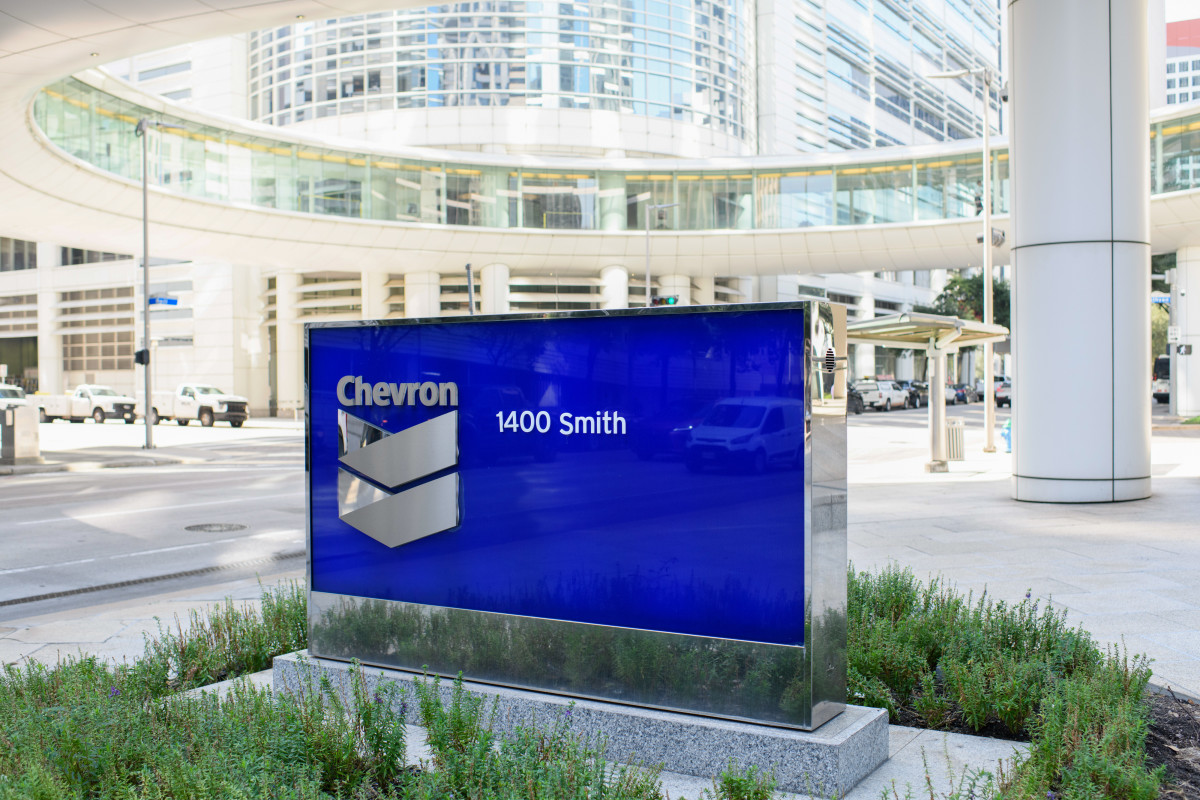
For more than a century, Chevron Corp. (CVX) was synonymous with California. Not only was America’s second-largest oil and gas company founded there in 1876 — it was also headquartered there.
In addition, Chevron employed thousands of workers, operated oil fields in the San Joaquin Valley, and maintained two refineries: The Richmond refinery in the San Francisco Bay area and the El Segundo refinery near Los Angeles.
The California Energy Commission reported that these facilities were among the largest in the state, responsible for 30% of California’s refined petroleum.
Where did Chevron’s headquarters used to be?
From its founding — the company was first known as the Pacific Coast Oil Company and later as the Standard Oil Company of California — Chevron’s headquarters were located in San Francisco on Market Street, in two granite skyscrapers known as the Standard Oil Towers.
Related: Who owns Chevron? Understanding who controls one of the world’s largest energy companies
In 1999, the company relocated about 35 miles outside of the city to San Ramon, into a sprawling 92-acre campus known as Chevron Park.
But in August 2024, Chevron announced that it would be moving its headquarters out of state in order to “enable better collaboration and engagement with executives, employees, and business partners,” it said in a press release.
Why did Chevron move?
Chevron CEO Mike Wirth told The Wall Street Journal that the state’s energy policies were making it unsustainable for the company to remain in California. These policies “raise costs … hurt consumers … discourage investment, and ultimately we think that’s not good for the economy in California and for consumers,” he said.
Due to environmental policies extended under California Governor Gavin Newsom, Chevron faced mounting litigation over climate regulations, including the “cap-and-invest” program, which limits greenhouse gas emissions from large polluters.
Related: What does Chevron mean? A look inside its corporate logo
Through this program, companies that produce carbon emissions must buy credits from the state for every ton of C02 they emit above the “cap” threshold.
The Journal reported that due to regulatory challenges, Chevron wrote down as much as $4 billion in assets in the state in 2024. These policies also led to a 29% decline in the company’s California oil and gas production between 2018 and 2024.
So when the California Air Resources Board (CARB) introduced even more stringent “cap-and-invest” regulations in January 2026, Chevron execs did not mince words, saying that, if enacted, these new rules would not only affect the company but also the state.
Andy Walz, Chevron’s President of Downstream, Midstream, and Chemicals Division, told KCRA News that the program could send gas prices soaring more than $1 per gallon by 2030. He added that they could also drive the company’s refineries out of the state for good, saying, “It’s not whether refineries will close, it’s when.”
While Chevron’s Richmond and El Segundo refineries currently remain operational, employing 1,200 and 1,100 workers, respectively, there’s been heated discussion as to their future on social media:
Whereis Chevron’s new headquarters?
In 2024, Chevron moved its headquarters to Houston, Texas, a city widely considered the nucleus of the U.S. energy industry.
As of Chevron’s August 2024 announcement, roughly 7,000 employees out of Chevron’s 45,000 total workforce were based in the Houston area. CEO Wirth and other executive leaders relocated there at the end of 2024.
Company histories:
History of Microsoft: Company timeline & factsHistory of Coca-Cola: Timeline, facts & milestonesHistory of Nike: Company timeline and facts
In addition to its C-suite, Chevron’s corporate headquarters houses the company’s finance, communications, and legal departments, as well as the senior management responsible for Chevron’s global oil, gas, and renewable energy operations.
Being in Houston allows Chevron’s executives to operate closer to the technical expertise and infrastructure that power the global oil and gas industry, as well as to collaborate with other oil and gas companies.
ExxonMobil (XOM) moved to Spring, Texas, in 2023, and Phillips 66 (PSX) relocated from Bartlesville, Oklahoma, to Houston in 2012. ConocoPhillips (COP), Kinder Morgan (KMI), and Enterprise Products (EPD) all also call Houston home due to its low cost of living, no state income tax, and less restrictive regulations.
As The Houston Chronicle put it: “Big oil lives here.”
Related: Where is Apple’s headquarters? A spaceship-like office with thousands of trees
#Chevrons #headquarters #oil #giants #global #home