
US housing market stays tight as median home prices hover near $400,000
3 min read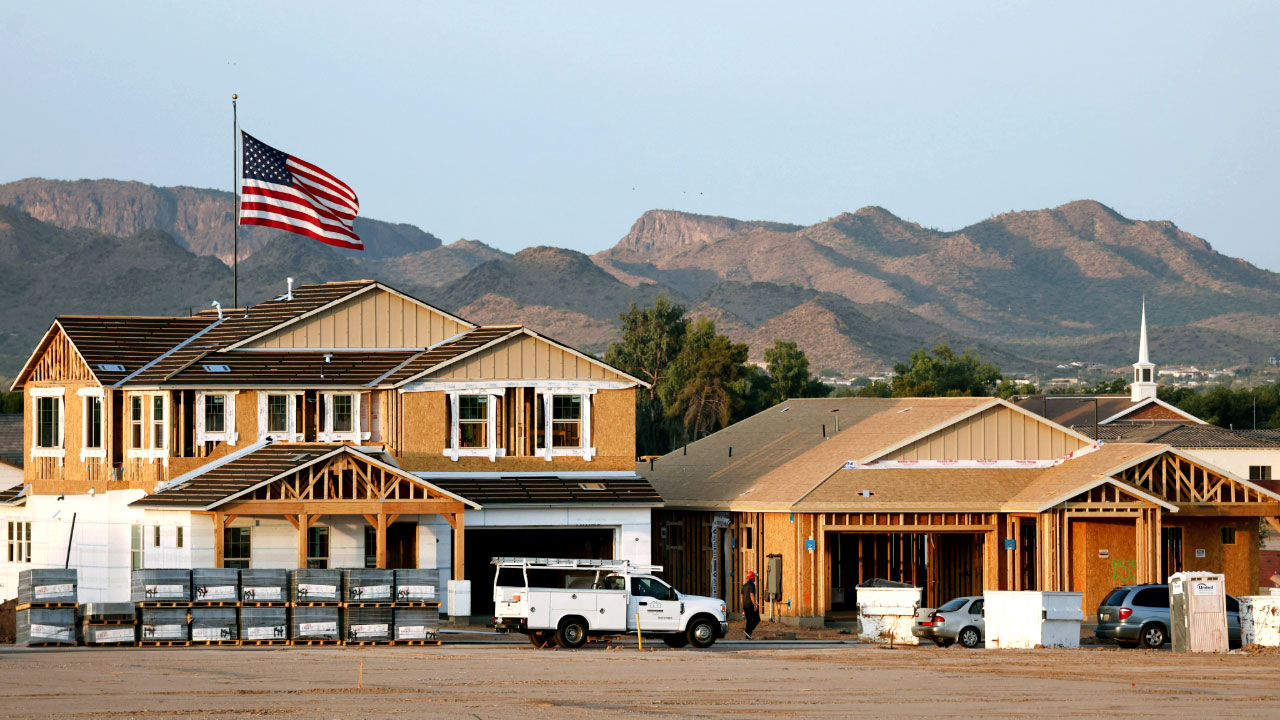
Fox Business’ Gerri Willis reports from the National Homebuilders Show as builders slash home sizes, turn to AI design and push tiny smart homes to combat the affordability crisis.
Home prices are still climbing, even as mortgage rates have eased slightly and inventory shows early signs of improvement, underscoring just how tight the U.S. housing market remains.
The median sales price for all existing homes last month hovered just below $400,000, marking the 32nd consecutive month of year-over-year price increases, according to the National Association of Realtors.
That persistent affordability squeeze is putting renewed pressure on homebuilders to help get the American dream back on track.
The average rate on a 30-year fixed mortgage is 6.11%, according to Freddie Mac. (Mario Tama/Getty Images)
TRUMP PLEDGES TO MAKE HOUSING AFFORDABLE WHILE KEEPING VALUES UP
Despite softer consumer sentiment and elevated borrowing costs, the homebuilding industry is signaling cautious optimism heading into the year.
“A lot of builders, many of these small businesses, men and women building homes across this country, had some of the best January they’ve had in a while,” National Association of Home Builders CEO Jim Tobin told FOX Business.
Industry leaders say part of that momentum stems from growing acceptance that interest rates are likely to stabilize rather than surge higher. A resilient stock market and steady job growth have also helped support buyer confidence on the margins.
Meanwhile, a structural shift in the market is giving new construction a competitive edge.
For the first time in modern housing cycles, newly built homes in some markets are now cheaper than existing homes. Builders say “rate lock” dynamics are a major factor. Millions of homeowners are reluctant to give up ultra-low 3% or 4% mortgages for rates closer to 6% or higher, limiting resale inventory and pushing more buyers toward new builds.
“A lot of people have more confidence in what their house should cost, and what we’re seeing right now is that new homes are the only game in town,” Tobin added.
The homebuilding industry is signaling cautious optimism. (David Paul Morris/Bloomberg via Getty Images)
HOMEBUYERS REFUSE TO BACK DOWN AS MORTGAGE RATES CONTINUE HOVERING STUBBORNLY NEAR 6% MARK
The supply imbalance remains severe. The U.S. is estimated to be roughly 4 million homes short, according to industry estimates, keeping upward pressure on prices even as construction activity fluctuates.
Still, builders face significant headwinds of their own, including high land costs, elevated labor expenses, material prices and regulatory hurdles at the local, state and federal levels.
At this year’s NAHB International Builders’ Show, the world’s largest annual light construction event, the industry is spotlighting new strategies aimed at improving affordability. Those include the use of alternative building materials, artificial intelligence in design and planning, and the expansion of smaller, more efficient housing models such as smart and tiny homes.
One of the most notable shifts is the steady downsizing of new homes.
Builders face significant headwinds, including high land costs, elevated labor expenses, material prices and regulatory hurdles. (Joshua Lott/Bloomberg via Getty Images)
AMERICAN HOMEBUYERS GAIN MOST PURCHASING POWER SINCE 2022
After the Great Recession, the average new home size reached roughly 2,700 square feet, according to Census data and an NAHB analysis. That fell to about 2,565 square feet during the pandemic housing boom and is projected to decline further to around 2,400 square feet by the end of 2025, according to the latest data available.
Builders are also cutting costs by simplifying designs, reducing or streamlining design teams and increasingly leveraging AI-driven planning tools to improve efficiency.
GET FOX BUSINESS ON THE GO BY CLICKING HERE
As a result, the average price of a newly built home is now estimated to be roughly $30,000 lower than the average existing home in certain markets, a reversal that would have been nearly unthinkable in previous housing cycles.
With resale inventory constrained and affordability still strained, builders are increasingly positioning innovation, efficiency and smaller footprints as the blueprint for easing America’s housing shortage.
#housing #market #stays #tight #median #home #prices #hover