
Trump calls for countries to send warships to reopen Hormuz
6 min read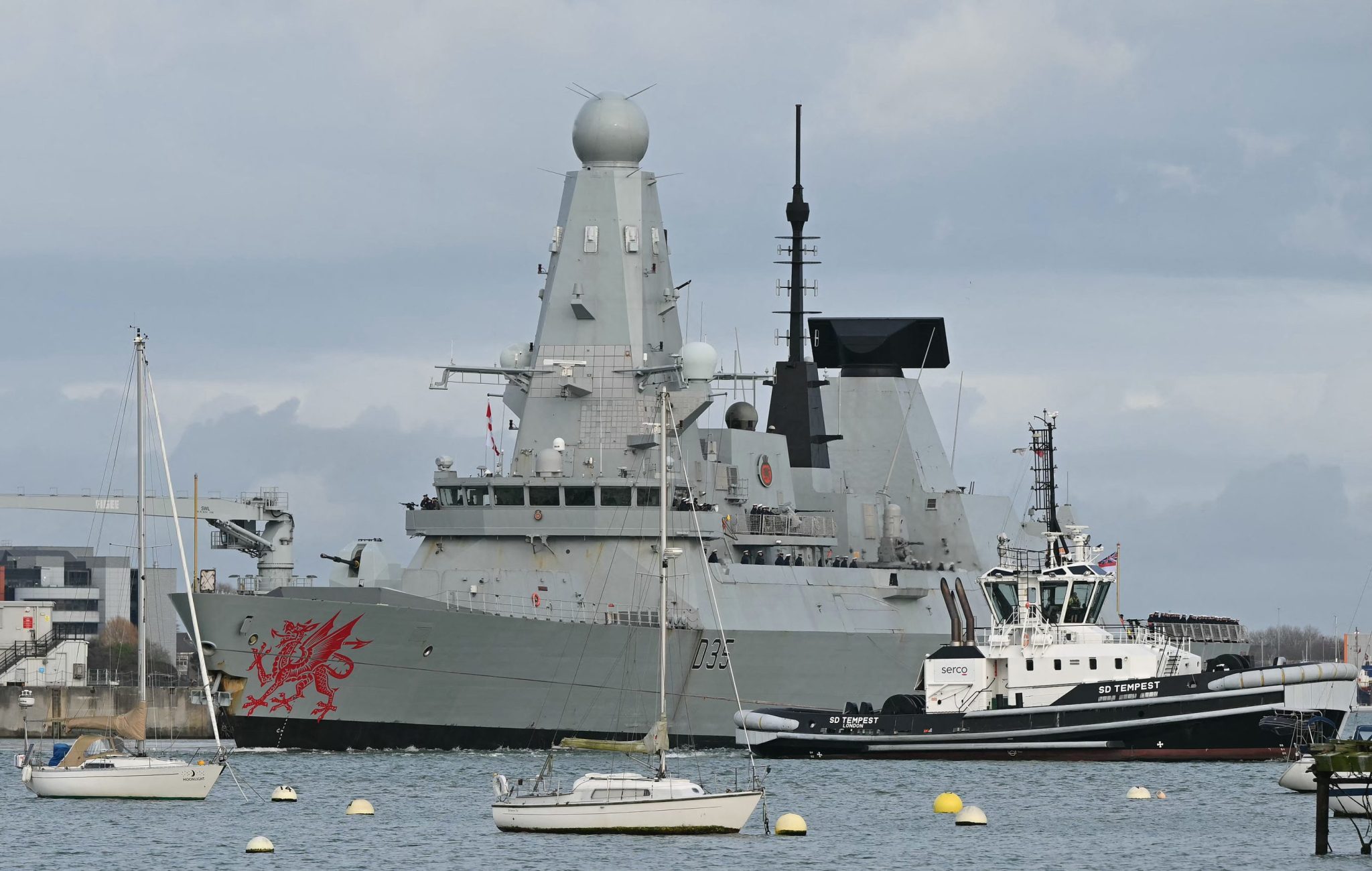
US President Donald Trump stepped up calls to reopen the vital Strait of Hormuz, saying warships will “hopefully” be sent to the area near Iran’s coast to help commercial vessels sail through safely.
His comments on Truth Social — which didn’t provide a timeline — came hours after he ordered a strike on military sites on Kharg Island, from which Iran exports almost all its oil, upping the ante in a Middle East war that’s raged for more than two weeks and shows little sign of easing.
The president said military facilities on the Persian Gulf island had been “obliterated,” adding that he chose not to hit oil infrastructure “for reasons of decency.” He threatened to do just that should Iran “do anything to interfere with the Free and Safe Passage of Ships through the Strait of Hormuz.”
“Many Countries, especially those who are affected by Iran’s attempted closure of the Hormuz Strait, will be sending War Ships, in conjunction with the United States of America, to keep the Strait open and safe,” he wrote in his latest post. He gave little detail beyond saying he hoped China, France, Japan, South Korea and the UK would also send warships.
He stated that even though Iran’s military was “already destroyed 100%,” it was “easy” for Tehran to continue threatening ships with drones, mines and short-range missiles. The US, he said, “will be bombing the hell out of” Iran’s shoreline to try to counter that.
Around the same time, Iranian Foreign Minister Abbas Araghchi said the strait — through which about a fifth of the world’s oil supplies normally flow — was only shut to ships from “enemies.”
Overnight and on Saturday, Israel and the US continued striking Iran, which in turn carried on attacking Arab Gulf states.
Roughly 3,750 people have been killed across the region since the war began on Feb. 28 with a US and Israeli bombing of Iran, according to tolls from governments and non-governmental organizations. The US-based Human Rights Activists News Agency said more than 3,000 people were killed in the last two weeks in Iran. Lebanon’s government says around 700 people have died in Israeli attacks on the country in a parallel war the Jewish state is waging against Iran-backed Hezbollah. Dozens have died across the Gulf and in Israel, while the US has lost 13 servicemembers.
Iran, easily outpowered militarily by the US and Israel, is targeting neighboring states, as well as shipping and energy sites, in a bid to cause chaos in the region and oil and gas markets, hoping it puts pressure on Trump to end the fighting. The US leader is facing criticism at home as gasoline pump prices soar and with many political opponents saying he underestimated Iran’s response and resilience.
Uncertainty over the length of the war is mounting amid Trump’s mixed signals and Iran’s continued defiance. On Friday, the president said the US would continue its campaign for “as long as necessary” and suggested the American navy would soon begin escorting ships through the Strait of Hormuz. That was a shift from earlier remarks that US military objectives were “pretty well complete.”
On Saturday, Israel’s defense minister, Israel Katz, lauded the attack on Kharg and said the war is entering its “victory phase.” He also said fighting would last “as long as required.”
Port Attack
In the United Arab Emirates, operations at the key oil port of Fujairah on the Gulf of Oman were suspended after a drone attack and fire on Saturday morning, people familiar with the matter said.
Loading of crude and refined products at Fujairah, just outside the Strait of Hormuz, was halted as a precaution while damage is being assessed, according to the people, who asked not to be identified as they’re not authorized to speak to the media. Fujairah is a major export hub for both crude and fuel products, and has taken on increased significance for both the UAE and global markets because it is one of the few export outlets for oil from the Gulf that bypasses Hormuz.
Iran’s Aragchai, speaking on MS NOW, said “it is clear” the missiles that hit Kharg Island overnight came from two locations inside the UAE.
Read More: Iran War’s Toxic Pollution Will Spread and Last for Decades
In Dubai, authorities said debris from an interception hit the facade of a building in a central part of the city. “No fire occurred and no injuries were reported,” the Dubai Media Office said in a statement on X.
A building in the Dubai International Financial Centre, which is in central Dubai, had visible damage to its facade on Saturday, although the exact cause wasn’t clear, according to people in the area.
“Accessibility and business operations continue, with some organizations adopting remote working,” the DMO said in an e-mailed response to questions. “The financial ecosystem remains resilient, marked by high levels of professional and market activity, and continues to function as an industry hub.”
The UAE government said the country detected nine missiles and 33 drones being fired at it on Saturday. The figure is broadly in line with the numbers from the previous few days.
Jordan, Iraq Struck
Jordan, which also houses US troops and aircraft, said it intercepted 79 ballistic missiles and drones in the past week. Air defenses failed to stop another six projectiles. Nine people were injured in the week, the Jordanian military said.
Iranian media reported more attacks on Tehran early Saturday, while the Islamic Republic’s military said it again targeted Israel overnight and Gulf bases hosting US troops. The Associated Press, citing Iraqi security officials, reported that a missile hit a helipad within the compound of the US embassy in Baghdad.
Brent crude closed above $100 a barrel on Friday and is now at its highest level in almost four years. Saudi Arabia, Iraq, the UAE and Kuwait have all had to curb crude production because of Hormuz’s de facto closure, while Qatar has halted operations for liquefied natural gas. It’s one of the world’s top three suppliers of the fuel.
Read More: Why Kharg Island Attack Raises Stakes for Oil Markets: Explainer
Two oil tankers were berthed at Kharg Island hours after the US attacked its military installations, according to Tankertrackers.com, a firm that specializes in following ship movements. And Iranian state media said exports were continuing as normal.
Still, Iran warned it will target American-linked oil and energy facilities in the Middle East if its own petroleum infrastructure is attacked. Iranian media said all oil-industry workers on the island, which sits about 25 kilometers (16 miles) off the mainland, are safe and unharmed.
“All oil, economic, and energy facilities belonging to oil companies in the region that are partly owned by the United States or that cooperate with the United States will be immediately destroyed and reduced to ashes” if Iran’s energy and economic assets are hit, the country’s Fars News Agency reported, citing the central military command.
The outlet said more than 15 explosions shook Kharg Island, with the targets including air-defense systems, a naval base, an airport control tower and a helicopter hangar. It didn’t specify the scale of the damage.
Read More: Israel Says Iran Is Firing Cluster Warheads Aimed at Civilians
The US military said it destroyed missile and naval-mine storage infrastructure.
In the days leading up to the US-Israeli attacks, Iran ramped up exports from Kharg to near record levels of over 3 million barrels per day, JPMorgan Chase & Co. analysts, including Natasha Kaneva, said in a research note. That was nearly triple the normal rate of shipments.
A strike on Kharg’s oil sites “would immediately halt the bulk of Iran’s crude exports, likely triggering severe retaliation in the Strait of Hormuz or against regional energy infrastructure,” the JPMorgan analysts said.
#Trump #calls #countries #send #warships #reopen #Hormuz