
The AI productivity boom has bosses asking what’s in it for employees
4 min read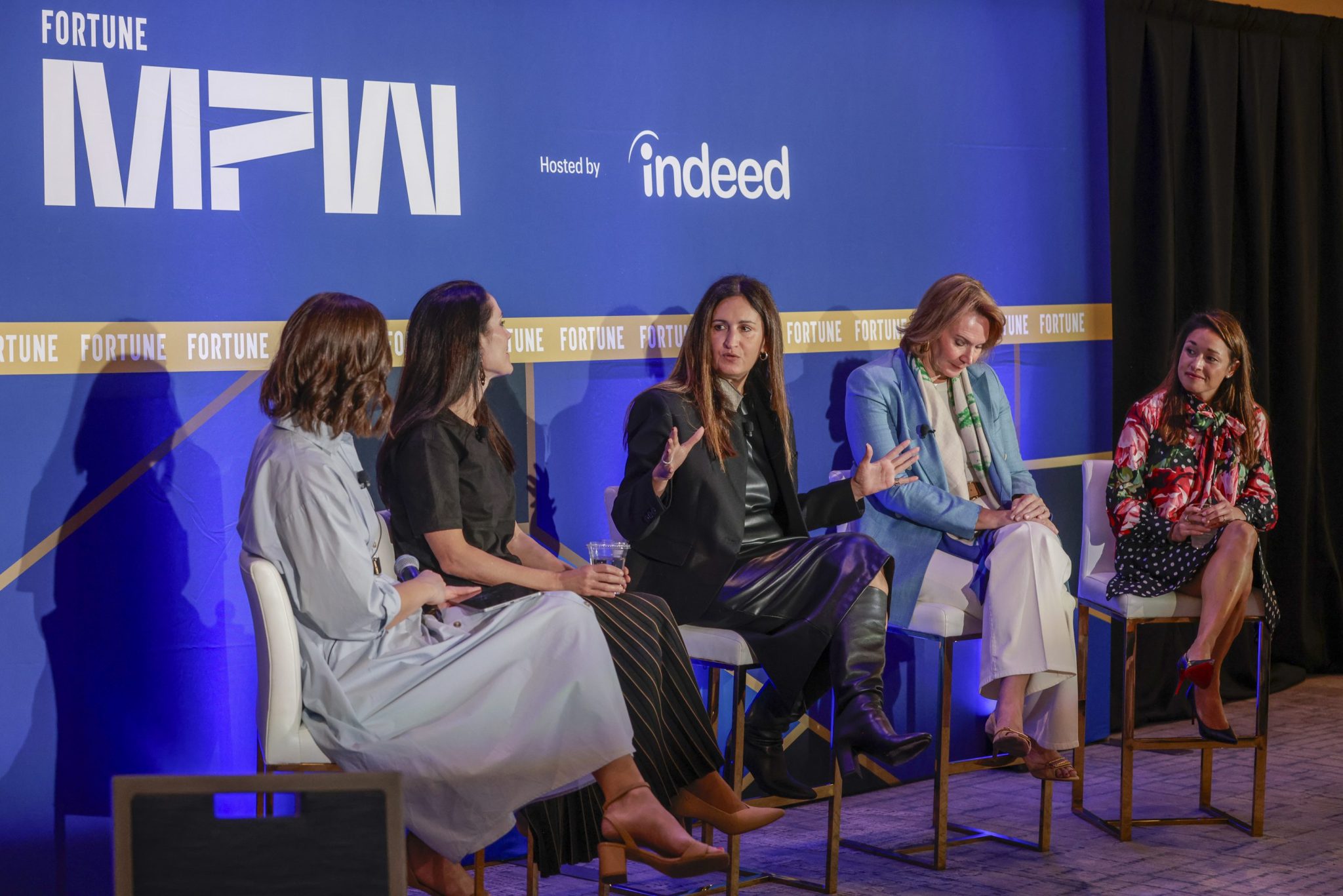
Good morning! Fortune reporter Emma Burleigh here, filling in for Kristin.
AI is helping employees get more done in less time. As companies race to capitalize on those efficiency gains, some executives are rethinking how they measure the technology’s success—and what it should ultimately deliver for their businesses and workers.
From unlocking creativity and innovation to protecting employees’ brain health, leaders are taking a broader view of AI’s impact on the workplace. The stakes are growing: U.S. employees who frequently use AI report higher burnout rates than those who don’t, according to 2026 data from Quantum Workplace.
For Athina Kanioura, global chief strategy and transformation officer and CEO of PepsiCo Latin America, rethinking AI’s value means challenging the pressure to prove immediate financial returns. Speaking with panelists from Indeed, Dropbox, and Bristol Myers Squibb at the Fortune Most Powerful Women conference last week, Kanioura argued that requiring a business case for every AI application risks overlooking benefits that are harder to quantify. She described the relentless pursuit of ROI as “death by a thousand cuts.”
At Indeed, AI is already delivering measurable productivity gains, helping software engineers write 50% more code and saving employees six hours a week, according to chief revenue officer Maggie Hulce. The company is looking to put that newfound time toward creative thinking and innovation, giving employees more opportunities to do work they enjoy. “We’re moving faster, we can innovate faster, we can invent faster, we can do fun work more and more,” said Hulce.
Other leaders are exploring how to keep employees mentally sharp. Dropbox chief people officer Melanie Rosenwasser said the $8 billion cloud company is examining the risk of “cognitive atrophy” as workers increasingly outsource their thinking to AI. Dropbox has introduced memory exercises, attention-span training, and puzzles. It also experimented with device-free “analog” off-sites and brought in a breathwork specialist for its executive team.
“When you outsource your thinking to AI, you become less intelligent in the process,” Rosenwasser said, referencing research from MIT professor Eric So. “So we need to be very deliberate about how we’re using these tools.”
At Bristol Myers Squibb, EVP and chief people officer Amanda Poole is weighing how much of the productivity gained from automating “joyless” work should go back to employees to support their well-being. The company has begun exploring a “well-being quotient” to decide how to split those gains between the business and its workforce.
“Let’s say we’re going to get 20% productivity [with AI]: What part are we going to take back as a company, and what part are we going to give back?” Poole said, adding, “We haven’t solved it, so more to come.”
Emma Burleigh
Fortune Success Reporter
emma.burleigh@fortune.com
Fortune Office Hours
This week, Crystal Barney, chief talent officer at public affairs firm APCO, answers your burning workplace questions. Responses have been edited for length and clarity.
Q: We have an employee—we’ll call him Steve—who’s been a solid performer for six years. After he was passed over for a promotion, his wife emailed HR demanding to know why. When we said we couldn’t discuss his employment with her, she emailed his manager and our CEO. Steve was mortified and said he’d asked her to stop.
After his annual review, she emailed us again, attaching screenshots of internal messages Steve had forwarded her. We told Steve he couldn’t share confidential communications.
Then Steve took several sick days. His wife called his manager, blamed work for his anxiety, and demanded paid medical leave. A leave request later arrived from Steve’s work email, which he admitted his wife had sent.
She then posted on LinkedIn accusing the company of destroying his mental health, publicly accused his manager of retaliation, and threatened legal action.
Steve says he had no idea she’d do any of this, but his performance is now slipping.
We can’t discipline Steve because his wife is difficult, but he has shared confidential information and let her use his work account. When does a spouse’s behavior become the employee’s problem? How do we handle this without creating a retaliation issue around his leave?
A: Steve can’t control his wife, and you can’t discipline him for her LinkedIn posts or her questions at a conference. But sharing confidential messages and letting someone else use his work account are his actions. Those are fair to address, the same way you would with any employee.
I’d have a direct, compassionate conversation with Steve. Make clear you aren’t asking him to manage his spouse. You’re asking him to protect company information and keep his account to himself. Put expectations in writing and offer support.
On leave, treat the request like any other. If it’s unclear who submitted it, ask Steve to confirm directly, then let the process run.
I’m speaking from a U.S. perspective, and specific legal requirements vary by country, but the principle holds anywhere. To avoid a retaliation claim, keep decisions about Steve’s role, performance, and development consistent and documented, and loop in someone beyond his manager. Discomfort is human, but it can’t drive outcomes. And talk to employment counsel early, especially with a legal threat on the table.
Have a workplace situation that you’re unsure how to navigate or a scenario worth unpacking? Send it our way anonymously via this form.
Watercooler
A round-up of the most important HR headlines from Fortune and beyond.
Office creators. “Workfluencers” are landing brand deals worth up to tens of thousands of dollars—and 83% of them still have their day jobs. Fortune
AI debate. Job seekers who want to work at McKinsey may soon have to face an AI avatar client simulation first. Wall Street Journal
Visa volatility. Immigration lawyers and academics have identified the key winners and losers of the new H-1B reality. Business Insider
#productivity #boom #bosses #whats #employees