
Peter Thiel's Apple verdict raises a $5 trillion question
4 min read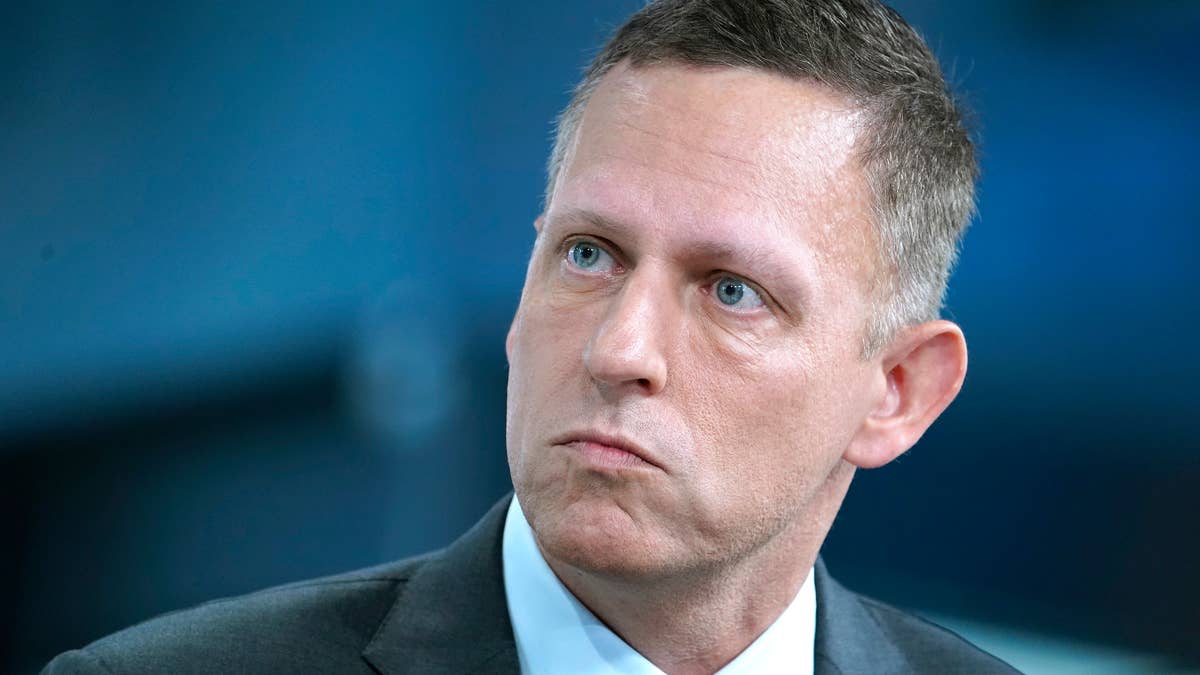
Having recently bought my wife a new iPhone 16+, I can’t help but think about its lofty price tag and what it’s really all about.
Sure, the camera might have gotten sharper (switching from 14+), the battery might have lasted longer, and the screen might have looked better. But if I put the two phones side by side, I don’t really think either felt like a tech revolution or even a major upgrade over something my wife already owned.
That’s the question PayPal co-founder Peter Thiel just raised about Apple (AAPL).
In a recent interview with Walter Isaacson, Thiel said that the company has done little genuinely new since Steve Jobs died in 2011.
Though the business is brilliantly run, Thiel said the breakthroughs have become tougher to spot. The criticism comes at a point when Apple is spending billions on research and development, while its market value has surged into the trillions.
For anyone holding Apple stock, the question isn’t whether the iPhone remains popular. It’s whether Apple’s next big idea can justify the premium Wall Street is willing to pay.
Peter Thiel questions Apple’s innovation despite its roughly $5 trillion market valuation.
Justin Sullivan / Getty Images
Peter Thiel says Apple became better at profits than invention
In a recent interview with Walter Isaacson, as cited by the Times of India, the PayPal co-founder and serial entrepreneur Peter Thiel argued that Apple had done “nothing new after Jobs.”
More Tech:
Meta and Microsoft just sent employees a memo about Anthropic
Microsoft cutting off popular software with no extension Oct. 13
Apple’s biggest AI advantage may face new privacy challenge
The original iPhone was such a tremendous leap, he said, that management spent the following 15 years refining, marketing, and expanding the business instead of delivering a comparable breakthrough.
He contrasted the leadership styles of Apple’s prolific former CEOs Steve Jobs, who took unpredictable product bets, and Tim Cook, who perfected the machinery that turned those bets into profits.
Thiel called Apple a “pure, well-run value stock,” suggesting commercial success and technological progress aren’t exactly the same thing.
Apple’s accounts back that argument with substance.
During the first nine months of fiscal 2026, the company spent $62.1 billion on share repurchases, versus $34 billion on research and development, as per an SEC Filing. That’s $1.82 in buybacks for every $1 in R&D spending.
But buybacks don’t prove Apple neglected innovation. Research spending actually rose 33% from a year earlier, and the company has introduced the Apple Watch, AirPods, and its own Mac chips since Jobs died.
At the same time, Thiel’s skepticism hurt shareholders.
He declared Apple’s era over in 2017. Yet the stock closed October 23 at $347.73, up nearly 28% in 2026, giving Apple a market capitalization of roughly $5.1 trillion as reported by Reuters.
There’s another irony: its shares trade at around 40 times trailing earnings, hardly a bargain-basement valuation for what Thiel calls a value stock.
Apple has proved it can monetize its ecosystem brilliantly. Whether it can invent another revolutionary product remains to be seen.
Marques Brownlee echoes Thiel as Apple’s AI troubles divide customers
Thiel isn’t alone in questioning if Apple’s financial success comes at the expense of powerful new products.
On an episode of the Flagrant podcast, tech reviewer Marques Brownlee, better known as MKBHD, contrasted Steve Jobs’ relentless product demands with Tim Cook’s mastery of operations.
“Tim Cook might be an example of the ruthless supply chain guy. More like, he’s the business guy. Stock price has never been higher, but now you’re not necessarily as inspired by the new products or visions from the company.”
That criticism has become especially pointed over Apple’s AI endeavors.
In March 2025, longtime Apple commentator John Gruber criticized the company for promoting personalized Siri features before it could demonstrate them working. Bloomberg’s Mark Gurman and Drake Bennett later talked about the internal problems that delayed Apple’s AI ambitions.
For iPhone buyers, the disappointment was more personal than a missed technology milestone.
In a 2025 post on r/iphone, Reddit user u/Jamballam asked:
“How are you going to sell me a phone that doesn’t have the features advertised until after the warranty runs out?”
That exchange predates Thiel’s remarks, but clearly trust matters when phones promise features that arrive late.
Still, declaring Apple’s innovation finished overlooks the Apple Watch, AirPods, and M1 chips. Its redesigned Siri entered beta in September 2026, and the foldable iPhone Duo reached stores on October 23.
What Peter Thiel’s Apple criticism means for Apple stock investors
For shareholders, Thiel’s criticism runs into a powerful counterargument, which is that Apple’s underlying business is still booming.
In fiscal Q3, sales jumped 16% to $109.4 billion. iPhone sales climbed 22%, while Apple’s services business generated $30.7 billion at an impressive 75.6% gross margin.
That profitable ecosystem helps explain Apple’s $5.1 trillion market valuation, which it achieved this year.
Nevertheless, Apple stock is trading at a steep valuation and is priced for continued growth. That said, Apple’s November 2 earnings report offers the next test.
New CEO John Ternus needs to demonstrate whether iPhone upgrades, services growth, and improved AI capabilities can justify that premium while building confidence in Apple’s next chapter.
Apple doesn’t need to reinvent the iPhone every year to reward shareholders. But investors paying today’s premium need evidence that its products and future innovations can keep earnings growing.
Related: Bank of America warns of 2027 stock market risk few expect
#Peter #Thiel039s #Apple #verdict #raises #trillion #question