
Shopify's booming sales come with a costly catch
4 min read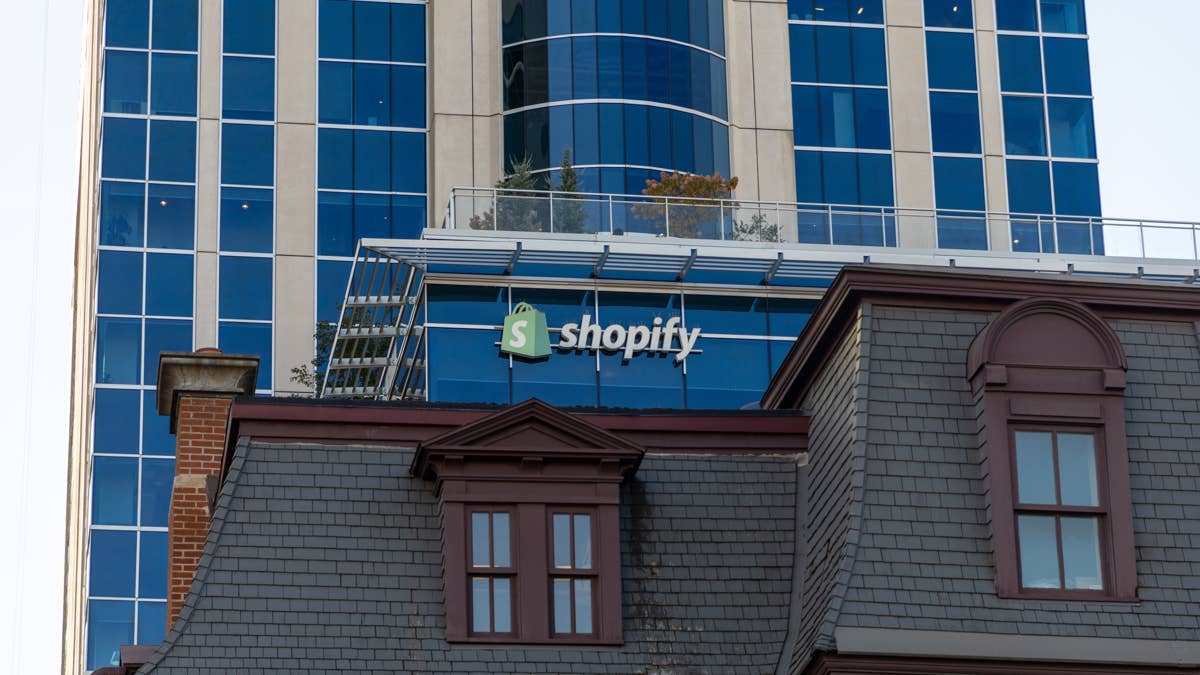
I’ve noticed how much easier it has become to shop directly from small businesses online lately, and I’ve done it several times myself. The one exception for me is clothing. I still prefer trying things on before buying. But for most other purchases, I don’t need to visit a physical store or even speak to a salesperson.
A few clicks on a website are all you need to get the job done. Technology has really made it easier for smaller sellers to compete with established retailers.
Shopify (SHOP) is the software behind a huge number of stores like that. It serves millions of merchants in more than 175 countries, has processed $1.6 trillion in total sales since launch, and holds more than 14% of U.S. e-commerce.
In the second quarter, revenue grew 34%, and free cash flow margin reached 18%. President Harley Finkelstein called it “a monster quarter,” with growth above 30% in sales volume, revenue, gross profit, and free cash flow.
CFO Jeff Hoffmeister credited “financial discipline.” However, strong results now set a higher bar for the next report.
Also Read: Shopify bets you’ll change how you shop online
Shopify’s growth is strong, but the bar keeps rising
In a note shared with me at TheStreet, Morgan Stanley maintained an Overweight rating and a $192 price target on Shopify in a preview titled “3Q26 Preview – Delivering Against a Higher Bar.”
Shopify will report its third-quarter (3Q) 2026 financial results on Tuesday, Nov. 3, 2026, before the U.S. market opens.
Morgan Stanley wrote that Shopify has rallied into the report, raising expectations. The firm expects about 33% growth in gross merchandise volume, the total value of goods sold through Shopify stores, against Street forecasts near 30%. It also expects gross profit growth of 31% to 32%.
More AI:
The new Chinese AI model rattling U.S. tech investors
Anthropic restores access to Mythos 5 for select organizations
SoftBank CEO offers stinging critique of Musk’s AI bet
The second quarter showed that AI spending need not hurt profit, the bank says, because extra revenue flowed through to gross profit.
The shares have not run away. Shopify is up 2.98% this year and down 7.38% over one year through Oct. 28, according to Yahoo Finance, though it is up 257.24% over three years.
Shoppers are helping. Morgan Stanley says U.S. retail and non-store sales returned to growth in August and September after a weak July. Adobe forecasts record U.S. online sales this holiday season. Growth came from both new merchants and existing ones selling more.
Why AI and a fragmented internet matter to Shopify
I’ve lost count of how many times I’ve come across a product on social media that I wasn’t even looking for. Sometimes curiosity gets the better of me, and I end up checking the seller’s website. Shopping can start almost anywhere online these days.
People now find products through search, social media, marketplaces, and increasingly AI shopping agents. Morgan Stanley argues that gives merchants more reason to run their catalog, inventory, checkout, and orders from one platform instead of juggling each channel. Shopify earns on the transaction, not the ad, so it benefits without owning the winning app.
The momentum is showing up in the numbers. Traffic and orders from AI channels both tripled in the second quarter, and new-buyer orders grew at nearly twice the pace of other channels. AI-assisted testing has shortened enterprise setup times from six or seven months to roughly five to five and a half months.
That speed helps big brands switch from Adobe, Salesforce, or custom-built systems. Merchants with $25 million or more in sales are the fastest-growing group. International sales volume grew 37% in the second quarter, and offline sales grew 32%.
AI comes with a bill. Sidekick, Shopify’s merchant assistant, adds computing costs that weigh on subscription margins, and investors have asked whether Shopify will raise subscription prices to cover them.
Morgan Stanley thinks Payments is the answer. When Sidekick helps merchants sell more, Shopify earns on that volume without a separate AI fee. Payments penetration reached 68% in the second quarter.
Despite pressure on gross margins, the bank expects operating and free cash flow margins to improve, forecasting at least 100 basis points of annual free cash flow margin expansion.
Shopify (SHOP) serves millions of merchants in more than 175 countries, has processed $1.6 trillion in total sales since launch, and holds more than 14% of U.S. e-commerce.
JHVEPhoto / Getty Images
Morgan Stanley says the holiday guide decides what’s next
The key is the fourth-quarter outlook. Morgan Stanley expects revenue growth guidance in the low-30% range and gross profit growth guidance in the high-20% to low-30% range, versus Wall Street forecasts of about 30% and 28%.
More weight is put on gross profit than revenue. Its early Black Friday math holds Shopify’s growth near 27%, but it says new merchants and big enterprise launches could beat that.
A strong guide would support about 30% sales volume growth into 2027, against Street forecasts moderating to the mid-20s.
At about 60 times 2027 free cash flow, Shopify trades above the roughly 36 times average for large software companies. Adjusted for growth, though, Morgan Stanley says it is in line, at about 1.77 times.
For investors, the message is that growth and margins, not a higher multiple, need to do the work. The bank says that a beat plus a strong holiday guide would extend upward estimate revisions beyond one quarter.
More Stocks NewsLockheed just landed one of the biggest defense deals in yearsNvidia’s $3 billion Meta bet reveals a 30-fold shiftWhy Netflix reportedly walked away from Xbox licensing dealRobinhood’s prediction-market revenue soars as crypto slumps#Shopify039s #booming #sales #costly #catch