
Morgan Stanley names top auto pick if gas prices stay high
4 min read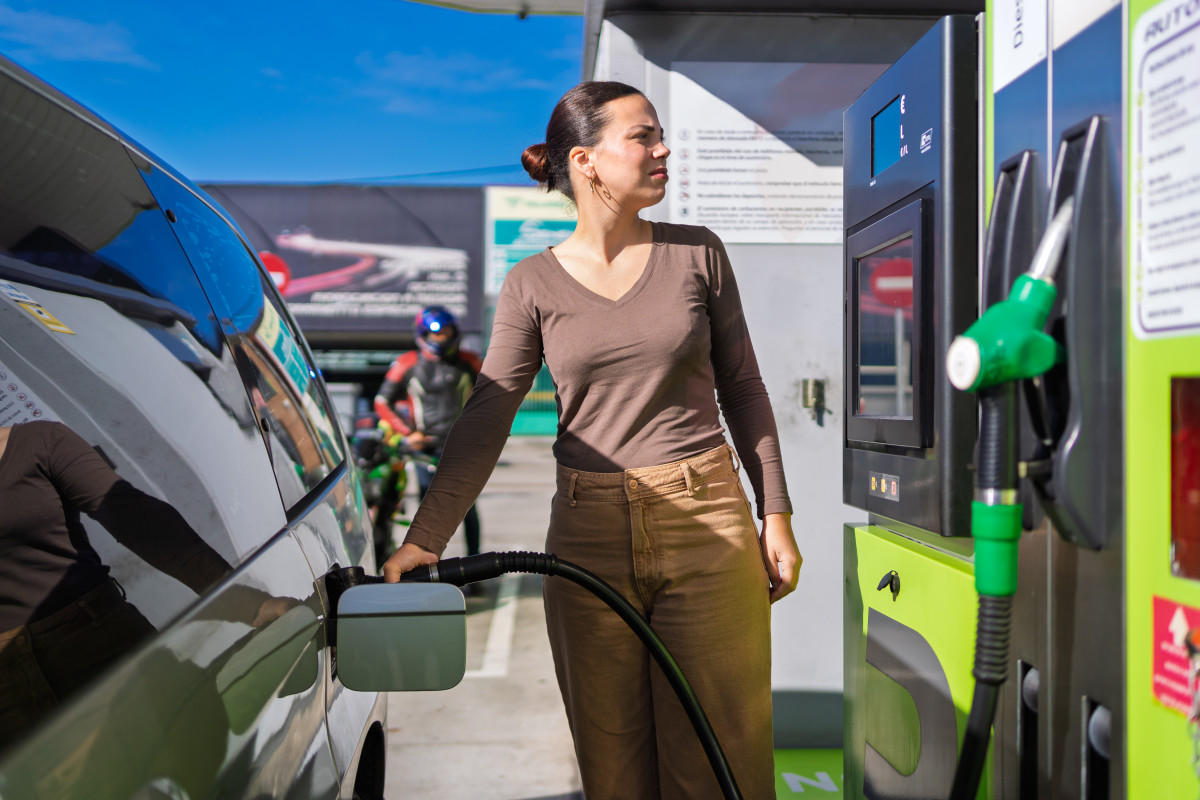
For car buyers, 2025 was a year of opportunity and crisis as the prospect of higher prices due to tariffs drove a record number of buyers to dealer lots in the first half of the year. Aided by increased dealer incentives to help goose sales, original equipment manufacturers like Ford and GM rode the first half of 2025 to record heights.
This year, it’s the price of oil, not tariffs, that is driving economic anxiety, and a prolonged price spike could have dire consequences for the auto industry, according to a new Morgan Stanley note.
If prices remain elevated for more than six months, consumers may start delaying vehicle purchases and opt for cheaper models rather than the more expensive SUVs that have been driving margins for years.
Sport utility vehicles accounted for 52% of new vehicle sales in 2025, up from 46% in 2021 and 38% in 2016, per Good Car Bad Car. Full-size SUVs have doubled their market share since 2016, representing 3.5% of the market.
The growth in SUV popularity is great news for automakers. Profit margins for SUVs and trucks average 10% to 20% higher than those for smaller cars, since larger vehicles are more expensive, but use many of the same components, according to The Week.
At the same time, electric vehicles have become more expensive and less profitable to produce, so the Big 3 U.S. automakers are all shifting their production capacity away from them towards SUVs.
But Morgan Stanley analysts see higher oil prices scuttling that strategy if they persist for a long period.
Gas prices are above $6 a gallon in several states.
Photo by FREDERIC J. BROWN on Getty Images
Car buyers expected to shift away from SUVs if gas prices remain elevated
The Iran War is in the middle of its fourth week, and the Iranian leadership just rejected President Donald Trump’s latest ceasefire offer, so at this point, there is no end in sight for the war.
Iran has already closed the Strait of Hormuz, through which about 20% of the world’s oil flows, and has now also threatened to close the Strait of Mandeb, which connects the Red Sea to the Gulf of Aden and accounts for another 11%.
“Escalating conflict in the Middle East is increasing risk across the global auto supply chain. Tensions around the Strait of Hormuz have heightened energy price volatility and raised concerns about shipping disruptions in oil and aluminum, among other upstream raw materials,” Morgan Stanley analyst Andrew Percoco said in a recent note.
Related: As gas prices soar, Costco membership pays off more
The firm says it is continuing to monitor potential OEM and supplier pressure, as well as the knock-on effects on pricing and demand, amid higher pump prices.
According to Morgan Stanley, every $1-per-gallon increase in gas prices results in a $450-per-year increase in fuel costs for gas-powered vehicles, assuming 27 mpg and 12,000 miles driven per year.
Electric vehicles really become a much more cost-effective option if gas prices rise to $4 per gallon. At that point, EV fuel costs are 60% lower annually than those of their internal combustion engine brethren, so consumers looking to buy a new car may opt for an EV rather than a fuel-guzzling SUV.
Focusing on lower-margin EVs could be disastrous to the well-laid plans of automakers who are focusing their energy on SUVs, so Morgan Stanley took the opportunity to reassess its calls on the automotive industry as it heads towards a gas-price-induced crossroads.
Morgan Stanley picks General Motors as its top auto pick amid higher gas prices
If the war persists, Morgan Stanley expects heightened volatility, and if that happens, it has picked General Motors, ol’ faithful, as its top sector pick, maintaining an overweight rating on the stock.
GM has “a strong execution track record of managing its business and delivering strong results through supply chain disruptions and volatile operating environments. GM remains one of the top ideas across autos, particularly with the recent sell-off, with the stock now trading at just 5.5x our 2026 EPS and offering 30% upside to our $100 price target,” according to Morgan Stanley.
Related: Cheap car insurance rates offer another insight into the SUV takeover
GM shares closed Wednesday’s session at $76.61.
Meanwhile, Ford, which has dropped 20% over the past month, fell 1.5% Wednesday, closing at $11.67 per share. Morgan Stanley has an equal weight rating on the stock.
“The recent sell-off in the Ford shares also provides a 20% upside to our $14 price target. However, we caution around potential adverse effects to the extent the industry sees an unfavorable mix shift (i.e., away from trucks),” the firm says.
SUV sales do have one lifeline should higher prices persist
Insurance companies adjust your rates based on the type of vehicle you own, and they deem safer vehicles as getting lower rates.
“Solid, safe and reliable vehicles with low repair costs tend to be cheaper to insure than sports cars, foreign vehicles or cars with a history of costly repairs,” according to analysts at CarInsurance.com who ranked the cheapest cars to own, and found that now SUVs are overtaking sedans in affordability.
In fact, sedans now cost on average 10% to 15% more to insure than comparable sedans due to structural design differences and claims data and 16 of the top 20 cheapest cars to insure on CarInsurance.com’s list were SUVs.
“Repair and replacement costs are a huge factor for insurance rates,” says Zach Lazzari, founder at Cross Border Coverage. “For example, some vehicles have very high repair costs for common fender bender damage. Entire panels may require replacements on one vehicle, while others can be fixed with a simple dent remover and some fresh paint.”
The top-5 cheapest SUVs averaged under $1,172 for a six-month premium, while the cheapest sedan (unsurprisingly, a Subaru Legacy) had an average six-month premium of $1,265.
Related: J.P.Morgan tweaks its bearish Rivian stock outlook after Uber deal
#Morgan #Stanley #names #top #auto #pick #gas #prices #stay #high