
BlackRock CEO issues stark warning on recession risk
4 min read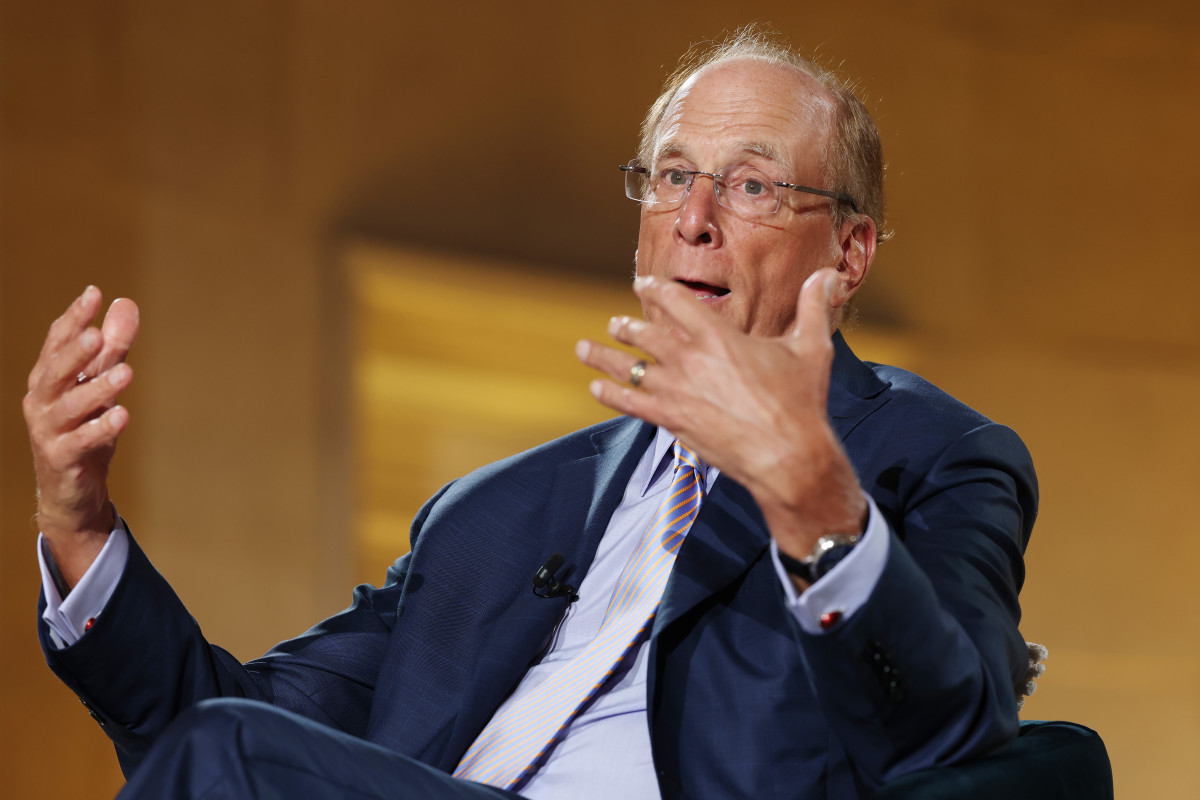
BlackRock CEO Larry Fink just joined a growing chorus of high-profile names sounding the alarm over a potential global recession, saying oil prices might surge to $150 a barrel if geopolitical tensions involving Iran persist.
In an interview cited by Reuters, Fink laid out the case that even if the war wraps up, the relentless threats to trade the Strait of Hormuz could potentially keep oil prices on the higher side (well above $100), with massive implications for the global economy.
At those lofty levels, recession risks rise sharply.
That stark warning comes at a point where energy markets have been incredibly volatile.
Oil prices have risen dramatically since the conflict began, kicking into high gear following Iran’s move to close the Strait of Hormuz on March 2.
Though prices pulled back briefly following reports of a potential ceasefire proposal, the broader risk is still in play.
The International Energy Agency describes the situation as what has now become the largest oil supply disruption on record.
For perspective, at the time of writing, as per Yahoo Finance, Brent crude traded at $97.26 a barrel and WTI at $90.32.
That leaves Brent up roughly 60.1% year-to-date and WTI up 57.6%. Since the Iran war started on Feb. 28, Brent has skyrocketed nearly 34.2% and WTI 34.8%.
For some added color, the U.S. has had three widely recognized oil-driven recessions, in 1973-75, 1980, and 1990-91. In fact, some economists argue that the number should be four, including the 1981-82 double-dip downturn.
Interestingly, I recently covered Goldman Sachs resetting its recession odds, raising the probability of a U.S. recession to 30% from 25%.
Just a couple of weeks ago, the odds were closer to 20%, but now recession risks are being repriced in real-time.
Likewise, Fink’s message is clear.
If the geopolitical situation remains as tense and oil stays elevated, the resulting effects on inflation, growth, and global markets could be a lot more significant.
BlackRock CEO Larry Fink warns sustained high oil prices could trigger a global recession risk
Photo by Paul Morigi on Getty Images
Wall Street’s latest oil price targets
Here’s how the big banks and analysts reset their oil price targets after the Iran war erupted.
Goldman Sachs: $85 Brent.Morgan Stanley: $80 Brent.Standard Chartered: $85.50 Brent.Barclays: $85 Brent.Bank of America: $77.50 Brent.Citi: $75 Brent Q1 / $78 Q2 / $68 Q3.UBS: $72 Brent.Bernstein: $80 Brent.
Source: Reuters.
Why oil prices matter for recessions
In understanding the connection between the two forces, think of oil as essentially a tax on the economy.
So when crude oil prices rise, it doesn’t just impact the gas pump, but it ends up flowing through virtually everything.
That includes everything from shipping and airlines to food and manufacturing. Businesses are facing significantly tighter costs, and consumers suddenly have less cushion to spend elsewhere.
More Wall Street
Billionaire Dalio sends 2-words on Fed pick WarshTop analyst bets these stocks will boost your portfolio in 2026Bank of America sends quiet warning to stock market investors
That’s exactly when the slowdown starts.
If consumers are paying a lot more in fillin up and heating their homes, discretionary spending takes a major hit. In tandem, you have businesses looking at weaker margins and are compelled to delay hiring or investment.
On top of that, higher oil prices tend to push inflation up, compelling central banks to second-guess cutting rates or even think about keeping them tighter for longer.
That troubling combo of weaker demand and tighter financial conditions is what ushers in a recession.
Why BlackRock’s CEO sees a bigger economic threat ahead
Fink’s warning has everything to do with the elevated energy prices becoming the new normal instead of being a temporary shock.
The BlackRock CEO feels that even a ceasefire might not be able to fully solve the problem if Iran continues to negatively impact trade routes and regional stability.
As he put it,
Naturally, the story becomes less about energy and more about inflation, and how that impacts consumers and economic growth.
Heightened fuel and shipping costs ripple through the economy, and though we haven’t seen a meaningful impact on inflation yet, things could get dicey in the not-so-distant future.
Fink points to a painful global recession if oil prices hover at $150 a barrel, suggesting that could become a new baseline.
Moreover, Moody’s Analytics chief economist Mark Zandi also sounded the alarm on that scenario, having recently reset recession odds.
In fact, in a recent report from Business Insider, Zandi argued that even a sustained move to $125 oil might be enough to tip the U.S. economy into recession.
Put simply, Fink believes that if oil prices stay high long enough, the economic consequences will be more severe and spread quickly.
Latest Wall Street calls on U.S. recession riskJPMorgan: Sees 35% recession odds, arguing the markets aren’t pricing in an elongated oil shock weighing-down demand.Bank of America: Argues recession risks are underpriced, warning of a drawn-out conflict potentially slowing global growth.Morgan Stanley: Pushed its first Fed rate-cut call to September (from June), on the back of oil-driven risks to activity and jobs.Goldman Sachs: Bumped its recession probability to 30% from 25%, underscoring how quickly risks are building.Moody’s Analytics / Mark Zandi: Puts recession odds at 49%, saying it might top 50% if oil prices continue to remain elevated.EY-Parthenon / Gregory Daco: Sees 40% odds, with risks surging if geopolitical tensions worsen.
Source: Wall Street Journal, Barron’s, Reuters, JPMorgan Chase.
Related: Gold’s biggest drop in decades hides a powerful tailwind
#BlackRock #CEO #issues #stark #warning #recession #risk