
She was a customer before she was the CFO. Now she’s steering Workiva to $1 billion in revenue
5 min read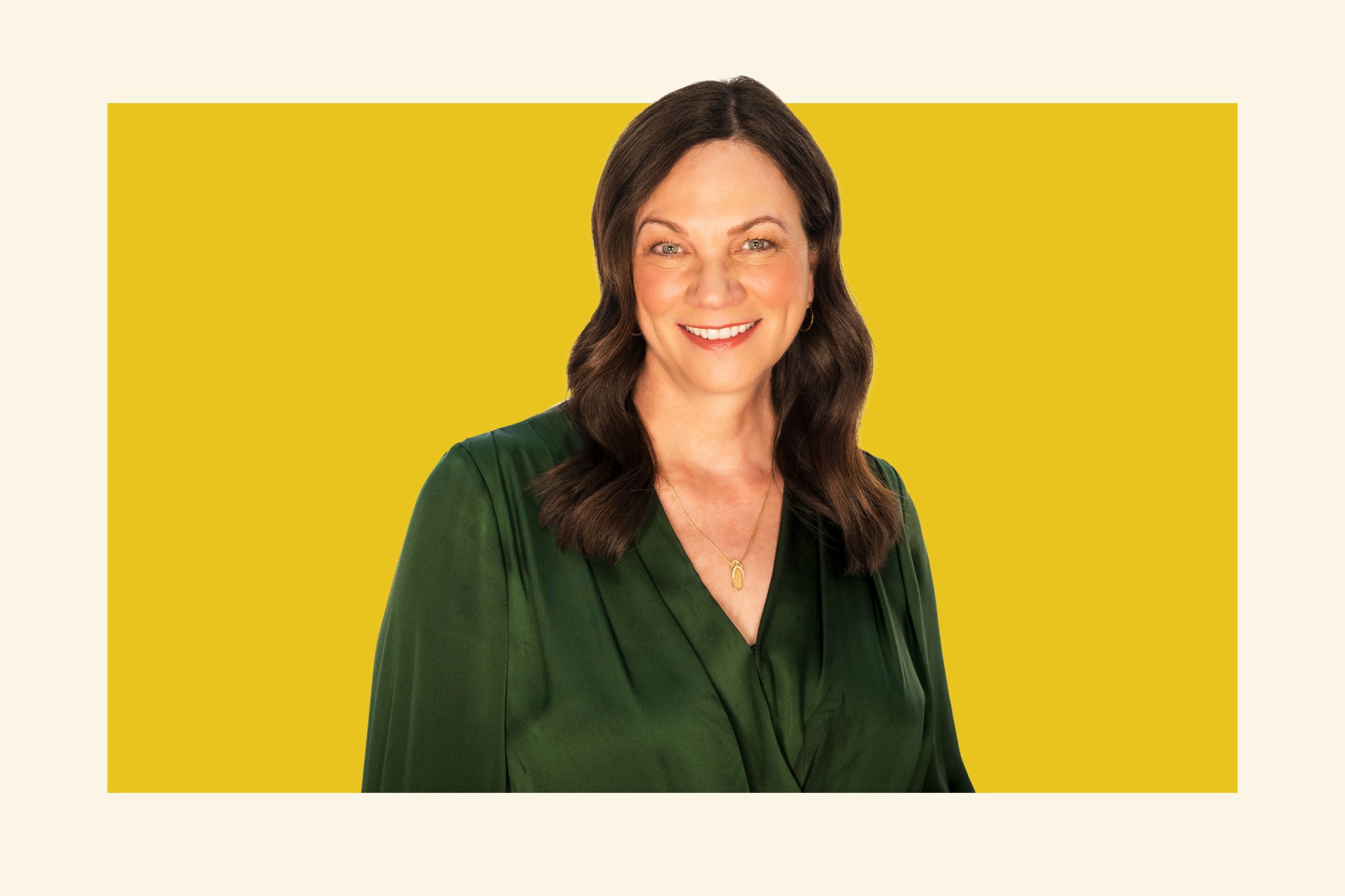
Good morning. When Barbara Larson stepped into the role of EVP and CFO at Workiva in January, she wasn’t entering unfamiliar territory. She had used the company’s financial reporting platform at Workday and VMware and had advocated for it. So, when the opportunity came to join Workiva, she says the decision was uncomplicated.
“I love this stage of the company,” Larson told me. It’s the high-stakes push to scale. “We’ve guided to $1 billion in revenue this year.”
Workiva (NYSE: WK), which offers an AI-powered platform for governance, risk, compliance, and sustainability, reported $885 million in total revenue for fiscal 2025, a 20% year-over-year increase, with subscription and support revenue growing 22%. For the full year 2026, total revenue is expected to be in the range of $1.036 billion to $1.040 billion. Among the company’s more than 6,600 customers are Hershey, Slack, and KeyBank, according to its website.
Barbara Larson, EVP and CFO at Workiva
Courtesy of Workiva
Larson brings more than two decades of financial leadership experience. She most recently served as CFO at SentinelOne and previously spent nearly a decade at Workday, ultimately becoming CFO. She also held senior roles at VMware, TIBCO Software, and Symantec.
Many companies are still drowning in data across disparate systems, a pain point Workiva is designed to address, Larson said. “I’ve spent my entire career in finance,” Larson said. You’ve got your data working either for you or against you—there isn’t a middle ground, she said. If you’re running AI across fragmented systems or unreliable data, you aren’t accelerating insight; you’re just accelerating the wrong answers, she added.
Regulatory pressures are intensifying, Larson noted, with shifting requirements and a changing geopolitical backdrop making compliance a moving target. Workiva’s approach is to ground AI within the customer’s own data, standards, and context, so output isn’t merely “plausible” but actionable and defensible, she said.
That applies to internal users managing SEC reporting, Sarbanes-Oxley compliance, enterprise risk management, and sustainability disclosures, as well as external auditors using the same platform. Larson points to SEC risk factor drafting: when new standards or risks emerge, AI itself being a prime example, teams can draft disclosures and benchmark them against peers within a controlled environment.
Larson’s role also reflects a broader shift in what it means to be a CFO in 2026. The job, she says, looks nothing like it did five years ago.
That includes a dual mandate on AI: CFOs must drive adoption across the enterprise while transforming their own finance organizations. At Workiva, Larson is partnering with the CIO and executive team to identify where AI can drive faster outcomes and create leverage for shareholders, she said. In fiscal 2025, Workiva delivered more than 600 basis points of non-GAAP operating leverage alongside 20% revenue growth, a trajectory she aims to continue.
As a mentor, Larson’s advice is grounded in her own biography. Growing up moving frequently, she learned to embrace change, be adaptable, and stay curious—principles that apply to the age of AI.
“If you are going to be a really strong finance leader, you have to understand the broader business,” she said.
Sheryl Estrada
sheryl.estrada@fortune.com
Quick note: CFO Daily marked five years on March 28! Over the years, I’ve had the opportunity to speak with hundreds of finance chiefs across industries. It has been fascinating to report on the evolution of the CFO role and the future of the finance organization. A special thanks to Fortune’s executive editor Lee Clifford, who has worked with me from the beginning. And thank you for your readership.
Leaderboard
Michael Dixon was appointed CFO of Zaxby’s, a fast-casual chain that specializes in chicken, beginning March 30. Dixon brings over 30 years of financial leadership experience across restaurant, retail and entertainment companies. Most recently, he served as CFO of GoTo Foods. Before that, Dixon spent multiple years serving as a financial leader at organizations across the restaurant and QSR industries. His experience includes Ignite Restaurant Group, Pinkberry, and Cheesecake Factory, where he served nearly a decade. Dixon will guide Zaxby’s through the company’s nationwide expansion after eclipsing 1,000 stores in 2025.
Hagit Ynon was appointed CFO of Pentera, a cybersecurity company. Ynon brings over 25 years of financial leadership to Pentera. Most recently, she served as CFO of WalkMe, where she was instrumental in leading the company’s IPO on the Nasdaq and its subsequent acquisition by SAP. Before WalkMe, Ynon spent nearly two decades at NICE, rising to VP of finance. In her new role, she will be responsible for Pentera’s finance, IT, legal, and revenue operations.
Big Deal
Bank of America payments data shows that just about 3% of Bank of America households currently pay for AI services, but momentum is building. The number of households making AI payments is up 38% versus the 2024 average, and the share paying $21–$40 monthly has risen 50% over the same period.
Higher earners and younger generations account for the largest share of AI spending, though median spending growth was strongest among $75K–$125K households in February — a sign the market is expanding beyond early, affluent adopters. As AI embeds itself across productivity, search, entertainment, and personal assistant use cases, BofA Global Research projects the U.S. market could scale to $75 billion annually.
Going deeper
“Nvidia’s Jensen Huang says, ‘We’ve achieved AGI.’ But no one can agree on what that means. Why the most important term in tech remains hotly debated” is a Fortune article by Jeremy Kahn.
Artificial general intelligence, or AGI, has long been the ultimate goal of many AI researchers, according to Kahn. “That’s been the case even though there is no universally accepted definition of the term,” he writes. “It generally means AI that is as intelligent as humans, but there is a fierce debate over exactly how to define and measure ‘intelligence.'” Read more here.
Overheard
“As Women’s History Month comes to a close, it’s a meaningful moment to reflect not only on how far we’ve come, but the leadership responsibility we share moving forward.”
—Ann Dennison, EVP and CFO of The Cigna Group, wrote in a LinkedIn post on Monday.
#customer #CFO #shes #steering #Workiva #billion #revenue