
Stan Druckenmiller reveals the one stock he regrets selling
10 min read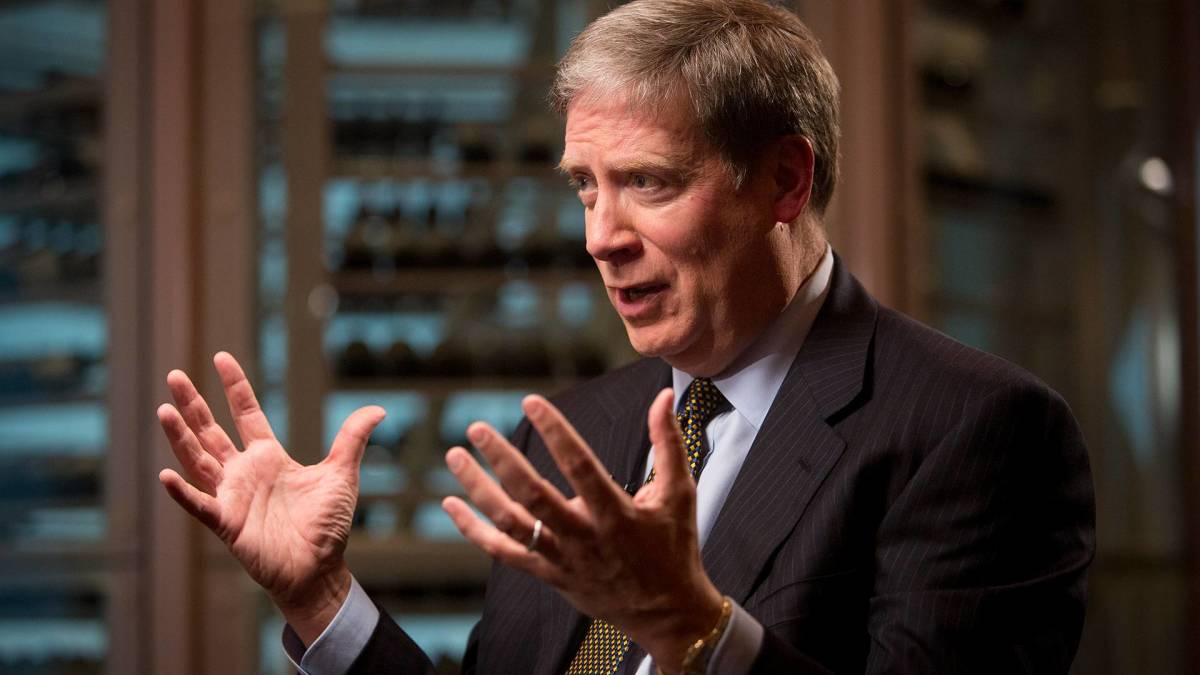
It’s impossible to build a three-decade track record of 30% annual returns without learning how to trust your own convictions over time. Stan Druckenmiller did exactly that as president for nearly 30 years at Duquesne Capital Management, compounding money with zero losing years on record.
He famously helped George Soros break the Bank of England in 1992, turning a single currency bet into more than a billion dollars, according to Bloomberg. So when Druckenmiller sits down and openly admits he made a devastating mistake, you should probably lean in and pay very close attention.
In a recent conversation with Morgan Stanley’s Iliana Bouzali on the Hard Lessons series, the billionaire investor got brutally honest about a sale that haunts him. He described a stock he bought on instinct, doubled down on twice within weeks, publicly declared he would hold it for three years, then sold.
The stock surged dramatically higher just five weeks after he exited the position, and the regret is still fresh today.
How a tip sparked one of the decade’s biggest trades
Druckenmiller did not find this stock through deep fundamental analysis or by sitting on earnings models for months on a spreadsheet, the Morgan Stanley interview reveals. He found it through people he trusted inside his own firm, starting with a young partner who had deep connections in Silicon Valley.
His team at Duquesne Family Office had been closely tracking developments in artificial intelligence from early to mid-2022, well before most investors understood it. Druckenmiller also noticed that top Stanford graduates were shifting their career ambitions away from crypto and toward AI, a trend signal he’s tracked for decades.
That partner brought in experts from his Palo Alto network who explained artificial intelligence in plain terms to the entire Duquesne investment team. Druckenmiller admitted most of the technical detail went right over his head, but he recognized the scale of what was happening around him.
He asked his partner one simple question about what he should buy to capitalize on the artificial intelligence wave building across the technology landscape.
The answer was immediate and direct: Nvidia, the chipmaker powering the infrastructure behind the entire AI revolution taking shape across the technology sector.
ChatGPT launch doubled Druckenmiller’s conviction almost overnight
Druckenmiller bought an initial Nvidia position based almost entirely on trust in his partner’s judgment, not on earnings reports or valuation spreadsheets. He purchased enough shares to feel the pain if he was wrong, but also enough to profit meaningfully if the thesis proved correct.
Two weeks after that initial purchase, OpenAI launched ChatGPT in late November 2022, and even Druckenmiller immediately grasped the significance of the moment. He doubled down on his position right away, recognizing that large language models had changed the trajectory of the entire artificial intelligence movement almost overnight.
Related: Amazon is selling vintage-style ChatGPT AI smart glasses for $14 with a translator function
Shortly after, a Morgan Stanley analyst on a macro conference call told the room full of top investors that they were all missing the real story. The analyst argued that AI was far bigger than anything the macro community was discussing at the time, including rates and the dollar.
Druckenmiller doubled his position again after hearing that the analyst reinforced everything his own team had told him just weeks earlier during their briefings. Within roughly three months, he had built a major Nvidia stake.
The six-times gain that still keeps Druckenmiller up at night
Nvidia’s stock climbed from around $150 pre-split to roughly $390 within months of Druckenmiller’s initial purchase, and he publicly declared his commitment to holding. He told interviewers he could not possibly see himself selling Nvidia over the next two or three years, given the magnitude of the AI shift.
His reasoning was rooted in decades of pattern recognition from watching transformative technology cycles reshape entire markets over extended periods. When massive disruptive change takes hold, Druckenmiller believed, most investors simply cannot force themselves to keep up with the momentum and price appreciation.
The individual who first tipped Druckenmiller off to Nvidia, and who had significantly greater AI expertise, exited the stock early in its run-up. Druckenmiller stayed in longer because his edge was never about understanding the technology itself, but about reading market psychology and investor behavior.
His conviction held as the stock powered higher through 2023 and into 2024, driven by Nvidia’s dominant position in data center GPU infrastructure. Every major tech company from Microsoft to Meta to Amazon was spending tens of billions of dollars on AI computing power, Nvidia’s investor relations data show.
Conviction met opportunity, but even Stanley Druckenmiller couldn’t fully ride Nvidia’s AI surge powered by Microsoft, Meta, and Amazon demand.
Bloomberg/Gettyimages
A public promise he broke in a moment of emotional weakness
The stock eventually reached roughly $800 pre-split, meaning Druckenmiller had turned his original investment into approximately a six-times gain in under two years. For a macro investor who typically measures success in percentage points rather than multiples, the size of the gain became psychologically overwhelming.
He sold everything, directly violating the public commitment he had made just months earlier about holding Nvidia for at least two to three years. Five weeks after he exited the position entirely, Nvidia’s stock surged past $1,400 pre-split, and Druckenmiller told Bouzali he felt physically sick.
“I couldn’t stand success…. I went from 150 to 800,” he said. “I was long-term in it. I couldn’t deal with it, and I sold it.”
You might expect a billionaire with decades of experience to shrug off a premature sale, but Druckenmiller did not minimize the mistake at all. He openly called it a violation of his own principles and acknowledged that he simply could not handle the emotional weight of such outsized success.
When Bouzali asked whether he would have made the same mistake 20 years ago during his prime years at Duquesne Capital, Druckenmiller was blunt. He said he probably would have screwed it up then, too, because he has never been comfortable making six times his money on a single equity.
Druckenmiller’s investing edge has nothing to do with analyzing spreadsheets
You might assume that one of the greatest investors alive relies on complex financial models or proprietary quantitative systems to make his major decisions. Druckenmiller himself would tell you that the assumption is completely wrong, based on his own description of how he operates at Duquesne today.
His advantage, by his own admission to Morgan Stanley’s Bouzali, is what he calls “trigger pulling” rather than raw analytical intelligence or deep industry expertise. He relies on a small group of trusted analysts and partners who understand specific sectors far better than he does across health care and tech.
When those trusted team members express genuine enthusiasm about an investment opportunity, Druckenmiller treats their conviction as a signal just as important as hard data. He freely admits that when his biotech analysts discuss genetic sequencing and gene editing, the scientific details go right over his head.
This approach directly contradicts the conventional wisdom that great investors need to deeply understand every position they hold in a diversified portfolio today. Druckenmiller prefers concentration over diversification, famously saying he likes putting all his eggs in one basket and watching that basket extremely carefully.
The lesson George Soros taught Druckenmiller still drives his trades
Druckenmiller credits two mentors with shaping his entire career, and the lessons from both remain central to how he manages money at Duquesne today.
His first mentor at Pittsburgh National Bank taught him fundamental analysis and the basic framework for reading markets and identifying investment opportunities early.
George Soros taught him something entirely different and arguably more valuable, which was the critical importance of position sizing in determining overall portfolio returns. The lesson was that being right or wrong on a trade matters far less than how much you make when right and lose when wrong.
Related: Billionaire Druckenmiller buys $152 million in megacap tech stocks
That sizing philosophy is exactly what kept Druckenmiller in Nvidia as it climbed from $150 to $390 and beyond, even when technically minded investors bailed. It also explains why his premature exit stings so deeply, because he violated the principle of letting your best winners run to their full potential.
For you as an individual investor, this framework is worth studying closely, even if you have never managed a billion-dollar portfolio at any point in your career.
The biggest determinant of your long-term returns is often how you handle your winners, not how brilliantly you pick them at the start.
Where Druckenmiller is investing in this volatile market
Druckenmiller told Bouzali in January 2026 that the U.S. economy looks strong and is likely to get much stronger in the period ahead. He pointed to potential fiscal stimulus and expects the Federal Reserve will probably cut interest rates rather than raise them in the near term.
Despite that bullish economic backdrop, Druckenmiller warned that U.S. stock valuations are near the top of their historical range, limiting the upside that remains. He described the opportunity set for macro investors over the next three to four years as genuinely exciting after a decade of relative dormancy.
His current portfolio reflects an eclectic mix of positions across multiple asset classes and geographies, rather than concentrated bets on any single sector or theme. Duquesne Family Office holds significant positions in Japanese and Korean equities, maintains a bearish stance on the U.S. dollar, and owns both copper and gold.
The copper position is built around a straightforward supply thesis, with limited new mining capacity expected for roughly the next eight years and rising demand. His gold holdings are primarily a hedge against geopolitical risk rather than a play on monetary policy or inflation, he told Bouzali.
Teva Pharmaceuticals doubled while Wall Street wasn’t paying attention
Before discussing Nvidia during the Morgan Stanley interview, Druckenmiller walked through a more recent investment that perfectly illustrates his process for finding overlooked opportunities. He described buying shares of Teva Pharmaceuticals, the Israeli generic drug company, when it was trading at just six times earnings in mid-2025.
Teva’s new CEO, Richard Francis, was executing a transformation strategy to shift the company from a traditional generic-drug business to a growth-oriented biosimilars platform. Value investors hated the pivot because it meant abandoning the cheap-stock thesis, while growth investors ignored it because the transition was not yet complete.
More AI Stocks:
Morgan Stanley sets jaw-dropping Micron price target after eventBank of America updates Palantir stock forecast after private meetingMorgan Stanley drops eye-popping Broadcom price target
That created a window when nobody wanted the stock, even though Druckenmiller could see real management progress behind the scenes, with strong improvements. The stock went from $16 to $32 in roughly six to seven months as the market gradually recognized the biosimilar transition was succeeding, SEC 13F filings show.
Druckenmiller’s Duquesne Family Office held Teva as approximately 4% of its total portfolio in Q4 2025, before trimming the position significantly after the run-up. His 13F filing with the SEC showed he reduced his Teva stake by about 65% during the fourth quarter of 2025 to lock in gains.
Practical lessons from Druckenmiller’s most expensive mistake
Druckenmiller’s Nvidia regret is not just a billionaire’s war story that makes for entertaining reading over your morning coffee on any Tuesday. It contains real, actionable insights that can help you avoid the same emotional trap that catches even the most experienced investors.
The core lesson is deceptively simple but extremely difficult to execute when your own real money is on the line every single trading day in your account. If your original investment thesis remains intact and the fundamental drivers have not changed, selling purely because of a large unrealized gain is emotional.
Druckenmiller has said publicly that most of his biggest career mistakes have involved selling great companies far too early rather than holding on through volatility. That pattern should give you pause if your own instinct during a strong rally is to take profits before the thesis has played out.
You should also notice that Druckenmiller built his initial Nvidia position with limited knowledge of the actual technology behind the company’s graphics processing units. What mattered was his ability to identify the magnitude of the disruption and trust the right people around him for technical validation.
Your emotions will cost you more than bad stock analysis
Druckenmiller told Morgan Stanley that he still fights emotional decision-making every single day, despite more than four decades of professional investing experience at the highest level. He described literally throwing up once or twice a week from anxiety during periods of portfolio drawdowns early in his career at Duquesne.
He eventually learned to accept that mistakes are inevitable and that torturing yourself over them for 48 hours or longer is completely counterproductive and wasteful. The real discipline, he said, is recognizing when a mistake is just a moment in time rather than a permanent verdict on your overall ability.
For you, the practical application is straightforward, even if it is genuinely hard to follow through on consistently across different market environments and volatile conditions. Before you sell any winning position, write down your original investment thesis and honestly ask yourself whether anything fundamental has changed.
If the answer is no, your urge to sell is almost certainly driven by emotion rather than logic, and that is exactly the kind of mistake that cost Druckenmiller.
His most important advice to younger money managers during the Morgan Stanley interview was brutally simple and worth repeating: Just get over it and move on.
Related: Stanley Druckenmiller buys shares in under-radar AI power company
#Stan #Druckenmiller #reveals #stock #regrets #selling