
Goldman Sachs has blunt message on gold price for rest of 2026
3 min read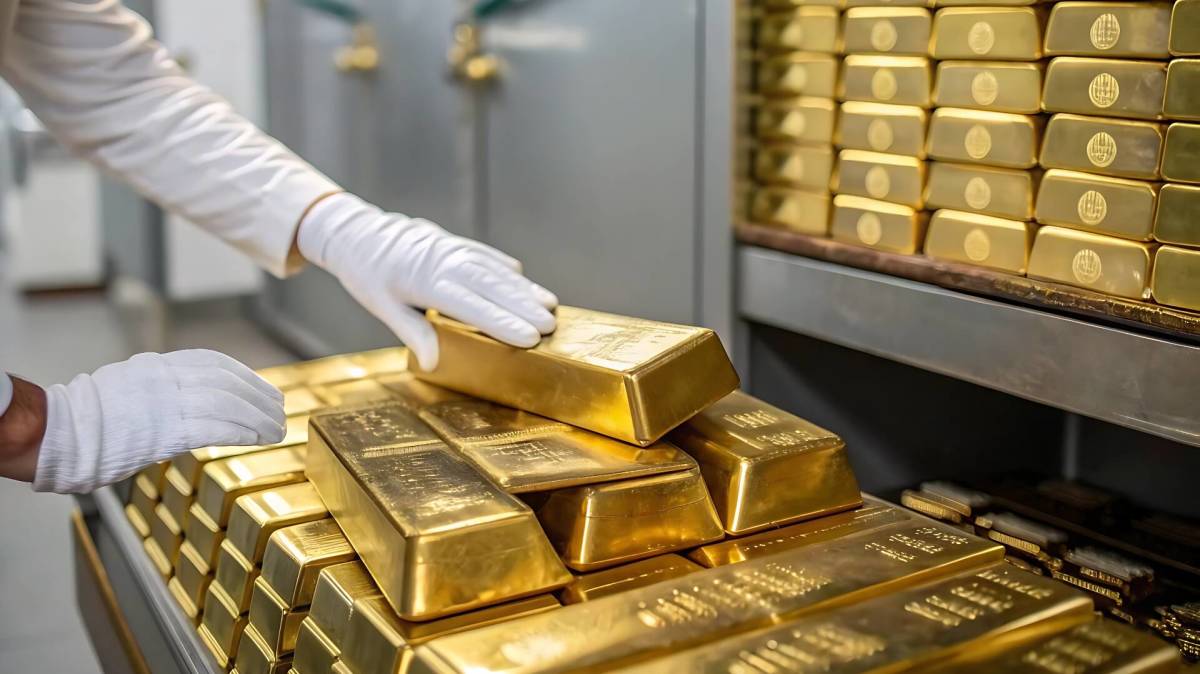
Gold just had its worst month in over a decade. Goldman Sachs is not budging.
After gold fell more than 10% in March 2026, its biggest monthly decline since June 2013, Goldman Sachs reaffirmed its $5,400 per ounce year-end target.
Spot gold is trading around $4,567 to $4,769 as of April 1, well below the all-time high of approximately $5,600 set in late January.
The bank’s message is direct. The March sell-off does not change the structural case. The buyers who drove gold higher are still there, and Goldman does not expect them to leave.
What Goldman actually said about gold
Goldman analysts Daan Struyven and Lina Thomas raised the bank’s 2026 year-end gold target to $5,400 from $4,900 in a note dated Jan. 22. The bank has maintained that target through the March decline.
The core argument is that private investors who bought gold as a hedge against long-term macro risks, including fiscal sustainability concerns and doubts about central bank independence, are not selling. These positions, Goldman says, are “stickier” than the event-driven bets that unwound after the 2024 U.S. election because the underlying concerns do not resolve on a known date.
“Risks to the upgraded forecast are significantly skewed to the upside because private-sector investors may diversify further on lingering global policy uncertainty,” Struyven and Thomas wrote.
Three drivers Goldman is watching
Goldman’s framework rests on three structural pillars.
The first is central bank buying. Goldman forecasts that emerging-market central banks will purchase about 60 tonnes of gold per month in 2026, as countries diversify reserves away from the U.S. dollar. China’s central bank extended its gold purchases for 15 consecutive months through January 2026, Central Banking reported.
The World Gold Council projects total EM central bank purchases will reach approximately 850 tonnes in 2026, per USAGOLD.
More Gold:
Gold just saw its biggest decline since 1983: what’s nextGold and silver bugs face grim reality checkGold’s price is falling fast: Here’s what comes next
The second is ETF inflows. Western gold ETFs added roughly 500 tonnes since the start of 2025, running well ahead of what Federal Reserve rate cuts alone would explain. Goldman expects a further half-point of Fed easing in 2026, which it estimates adds roughly $120 per ounce to gold’s price support.
The third is what Goldman calls the “debasement trade.” Concerns over long-term government debt levels and monetary policy credibility are driving physical bar purchases by high-net-worth individuals and call option buying by institutions.
These positions are structural, not tactical, which is why Goldman does not expect them to unwind on any near-term catalyst.
Key figures behind Goldman’s $5,400 call:Central bank purchases: Forecast at 60 tonnes per month in 2026Western ETF inflows: About 500 tonnes added since early 2025, above rate-cut expectationsChina gold reserves: 15 consecutive months of purchases through January 2026Expected Fed cuts: 0.5% in 2026, adding an estimated $120/oz. of price supportGold all-time high: Approximately $5,600 in late January 2026, per CBS News
Goldman Sachs analysts raised the bank’s 2026 year-end gold target to $5,400 from $4,900.
Hochmuth/Getty Images
Why gold fell so hard in March
The March sell-off caught many investors off guard. The U.S.-Iran conflict, which began Feb. 28, sent oil prices surging and raised inflation expectations. That pushed Treasury yields higher and strengthened the dollar, both of which are headwinds for gold as a non-yielding asset, per CNBC.
Gulf states liquidating gold reserves to cover revenue shortfalls added to selling pressure, CNBC reported. Speculative funds and retail investors who had built positions during 2025’s rally also unwound trades as volatility rose.
Goldman acknowledged the near-term vulnerability directly. “Risks are skewed to the downside in the near term, as persistent disruption to the Strait of Hormuz keeps gold vulnerable to further liquidation,” the analysts wrote.
Where Goldman stands relative to Wall Street
Goldman’s $5,400 target is actually the most conservative of the major bank forecasts. UBS raised its target to $6,200 for the first three quarters of 2026 with an upside scenario of $7,200. Deutsche Bank reiterated a $6,000 target. JPMorgan’s 2026 target sits at $6,300.
The gap reflects different assumptions about how much further private investor demand can run. Goldman’s base case does not require a new wave of buyers. The more bullish forecasts assume continued rotation from bonds and equities into gold as households and institutions reassess long-term fiscal risk.
Both camps agree on the structural foundation. They just disagree on how far it can carry prices by year-end.
Related: Wells Fargo resets gold price target for the rest of 2026
#Goldman #Sachs #blunt #message #gold #price #rest