
Michael Peterson: ‘We owe it to the next generation’ to fix national debt
4 min read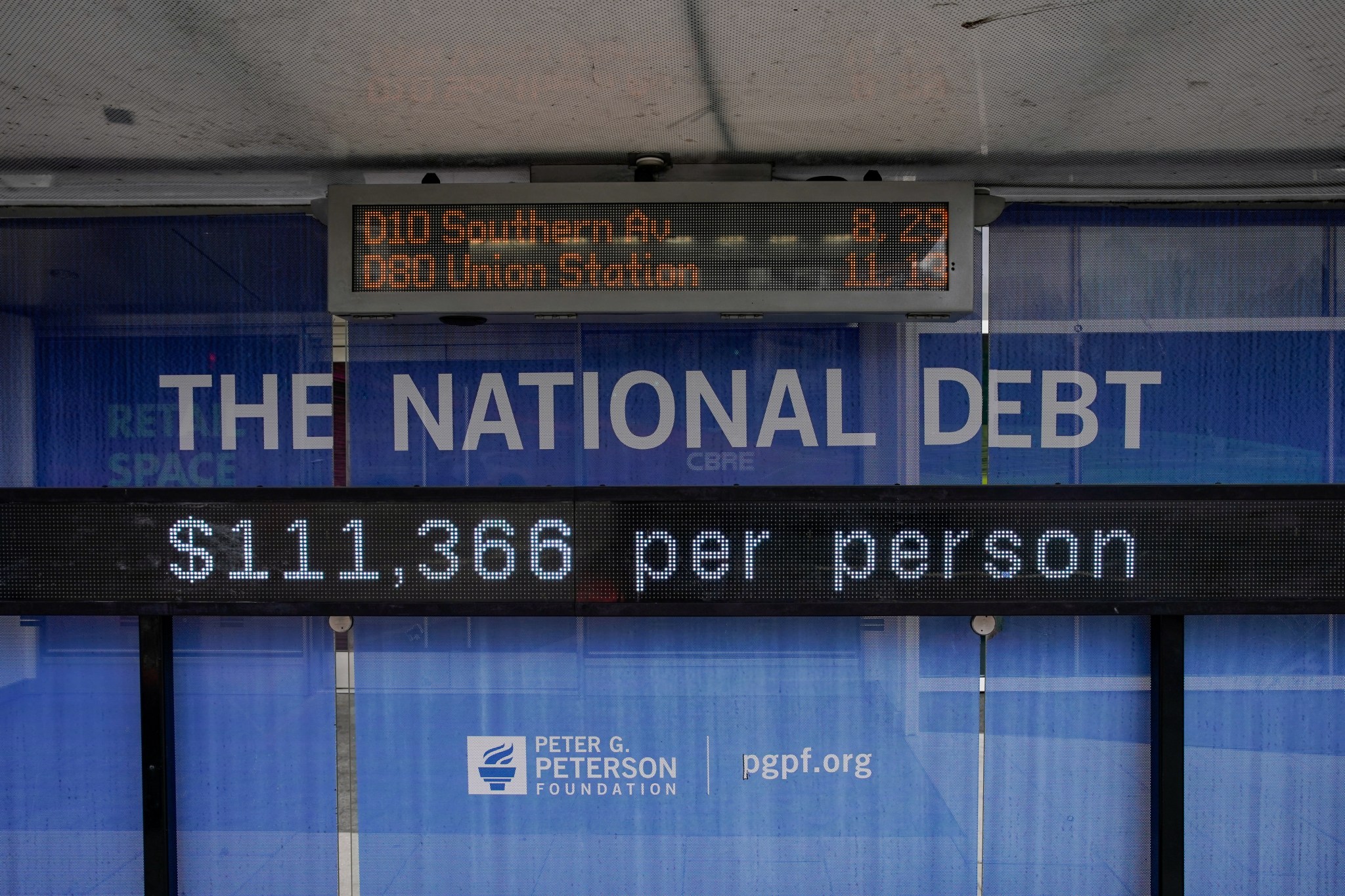
The Congressional Budget Office’s latest monthly budget says the U.S. government operated at a deficit of $1.17 trillion for the first six months of the fiscal year—from October 2025 to March 2026.
While the deficit is smaller than the shortfall for the same period last year, thanks in part to President Trump’s tariff regime, the fact remains that the U.S. economy is piling more debt atop a $39 trillion heap. Aside from the primary deficit, economists are also alarmed by the interest payments now required to service the debt—estimated to come in at more than $1 trillion this year.
The question of public debt is a concern for many, from Federal Reserve Chairman Jerome Powell to JPMorgan Chase CEO Jamie Dimon. Many have theories on how the borrowing may adversely impact the economy in the long run, from a squeezing out of public investment through to a market “reckoning” where bond investors demand higher returns for lending. Others suggest inflation may merely be allowed to trend higher, meaning the real value of the debt is eroded over time.
Indeed, the value of the debt itself is not the concern for many. Their alarm stems from the fact that the debt-to-GDP ratio is increasingly out of balance, and that the U.S. economy isn’t growing fast enough to keep up with its borrowing rate.
The more optimistic economic experts might argue the U.S. economy can grow its way out of a crisis (the potential transformative power of AI may offer a silver bullet here), while others point to the fact that 10- and 30-Year Treasury yields are showing no signs of panic.
Michael Peterson, chairman and CEO of the Peter G Peterson Foundation, warns that just because market alarms aren’t sounding right now, it doesn’t mean no issues will arise. The Peterson Foundation has long advocated for a more sustainable fiscal path for the U.S. economy.
“I think the bond market is often a very good indicator of sentiment of concern of risk,” Peterson told Fortune in an exclusive interview. “That’s what all these professionals are thinking about every day, and you have an enormous market that reflects the totality of thinking around that. Given that the bond market is doing decent, they’re not expecting a complete implosion in the near term.”
However, the fiscal decisions made across both sides of the political spectrum are “very damaging, even if there’s not a crisis,” Peterson said: “If you’re looking at a company, it’s not like: ‘As long as it’s not bankrupt, it’s fine.’ There are decisions that companies make that are ineffective and bad for growth—they over-lever, and maybe they don’t go into bankruptcy, but they damage themselves.”
“This is a home-brewed crisis of our own making, putting aside what the bond market might do on top of that,” Peterson continued. “I think we owe it to the next generation to get this under control.”
There’s also the matter of how the borrowing is spent: The CBO says that a significant proportion of government outlays ($1.7 trillion) are on immediate, mandatory expenses such as Social Security, Medicare and Medicaid.
While these are important, Peterson said, it doesn’t present the same return on investment that spending on infrastructure or education may have for future generations: “Even if we never have a crisis, these trillions of dollars—the vast majority of which has been for immediate consumption with no economic benefit to the future—have done damage to our kids and grandkids,” he added.
Future generations
Debate is also rife in the economics community about which category of consumer will feel the sharpest end of the national debt burden: Some argue it may be retirees, because their 401(k)s aren’t indexed to inflation and their savings may be lowered by “financial repression”—when the government keeps interest rates artificially low to make public funding cheaper.
Others argue a market reckoning would force interest rates up, so those with a mortgage (or hoping to get a mortgage) will pay the price.
Peterson is of the opinion that either way, the younger generations will bear the brunt of the burden: “I think it’s hard to parse through how it would pan out in terms of the pain, if you will, but it’s going to be widespread and it’s going to be significant and it’s going to be long-standing. We can fight over who got the worst end of the shortest stick, but we clearly are doing a disservice to anybody participating in the economy in the future.”
“I certainly worry that the most disadvantaged will pay the price if it squeezes out income support and other activities that the government would have done if they had more resources.”
#Michael #Peterson #owe #generation #fix #national #debt