
The viral TikTok $1.75 bid to save Spirit Airlines is fighting the wrong villain
3 min read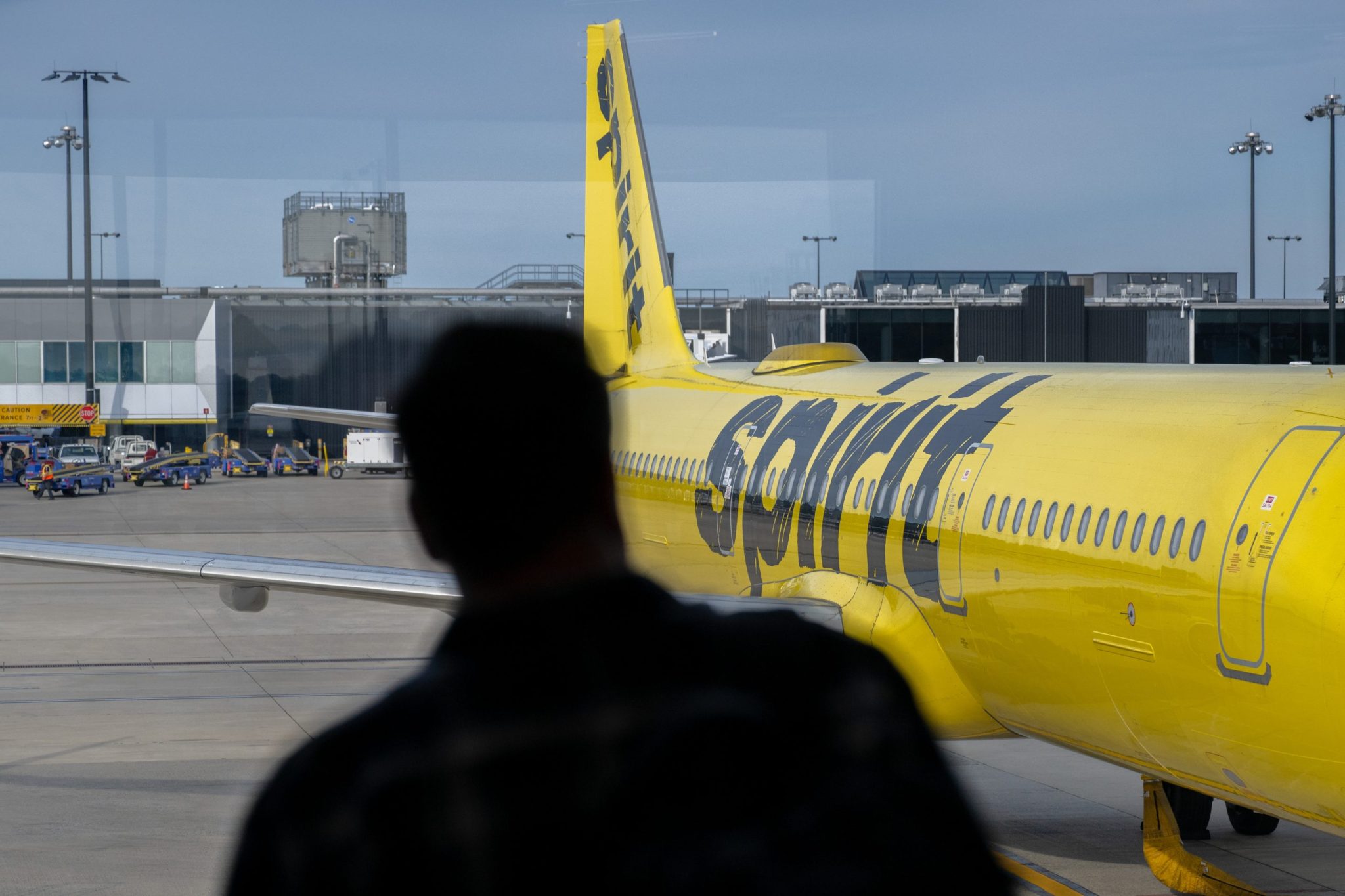
On Tuesday, what remains of Spirit Airlines is being picked apart in bankruptcy court. Aircraft lenders are repossessing those bright yellow airplanes while the major U.S. carriers jockey for the rest of the assets, like gates. But some fans of Spirit aren’t ready to give up yet.
Hunter Peterson, a 22-year-old voice actor for video games like Hyrule Warriors, posted a TikTok shortly after Spirit announced it was ceasing operations on Saturday, with a pitch for all of America: “We could buy Spirit Airlines.”
There’s 250 million adults in the country. Peterson said if only 20% of them paid $30 to $40 each, that would be enough to save the ultra-budget airline. The video quickly went viral, and by Saturday night, Peterson stood up letsbuyspirit.com, which he said crashed under its own traffic soon after. By Tuesday morning, it claimed $132 million in (nonbinding) pledges from more than 156,000 people, with a target raise of $1.75 billion.
The site has an interesting, quite populist framing. “Private equity is already circling the wreckage,” it reads. “The passengers, the workers, and the communities Spirit served can take it back. Like the Green Bay Packers. Like WinCo Foods. Like us.” The minimum pledge is $45, roughly the cost of a one-way Spirit ticket, the site claims. Every member would get one vote, the site says, and the profits would be distributed proportionally.
The pitch is fighting a nonexistent villain. Private equity isn’t involved with Spirit’s downfall. No one—not Frontier, which tried twice to merge with it, and neither the Trump administration nor any venture fund—wanted to buy the airline at the price its creditors needed. Spirit’s CEO cheekily told CNBC on Monday that “we just kind of ran out of runway.”
Spirit is dissolving, and it told the bankruptcy court this week it doesn’t even have enough cash to host an organized auction of its own aircraft and engines. Instead it’s opting to let the lenders take back the planes.
The two examples that Peterson invokes, the Green Bay Packers and WinCo Foods, aren’t the best fits. The Packers are the only publicly owned franchise in major American sports, but only because the team was grandfathered in before the NFL banned the structure in 1960. A share of Packers stock now confers no equity, has no payout, and can’t be traded; it’s more sentimental than financial. WinCo is an ESOP (employee stock ownership plan) in which the company itself, not the employees, makes all the contributions. Neither model translates directly onto a community of strangers pledging $45 each over the internet for a piece of a defunct airline.
Peterson told Yahoo News he wouldn’t be speaking to any publications until he had talked to his lawyer. He didn’t respond to Fortune’s request for comment.
Though the premise of Peterson’s pitch might be faulty, the voice actor is tapping into a real phenomenon. Spirit was the airline that Americans loved to hate. It was the punch line of many comedians’ jokes for its bright yellow planes, the seats that don’t recline, and all the excessive fees. Though that might work in Europe, it failed in the U.S. But despite all those quirks, Spirit was the people’s champion, the airline that kept American air travel cheap.
When Spirit entered a route, fares dropped across the board. Economists call it the Spirit Effect, and it’s real: The Department of Transportation has documented for years that just the presence of an ultra-low-cost carrier on a given city pair pushes other fares down by double-digit percentages. Without Spirit, as William McGee at the American Economic Liberties Project told NPR, “everyone will be paying more.”
That’s the part Peterson’s pitch is, in its own scrambled way, trying to get at. The four largest U.S. airlines now control roughly 80% of domestic capacity. Spirit, even at its diminished end-state, was still the eighth-largest carrier in the country. Its disappearance is the latest in a long history of consolidations—Northwest into Delta, US Airways into American, Continental into United, Virgin America into Alaska—that have left Americans with fewer choices for flights, and higher prices for those. Spirit’s own CEO, Dave Davis, told CNBC on Monday that more consolidation is “what the lower end of the industry needs.”
#viral #TikTok #bid #save #Spirit #Airlines #fighting #wrong #villain