
Exclusive: Roadrunner raises $27 million from Kleiner Perkins and Founders Fund
6 min read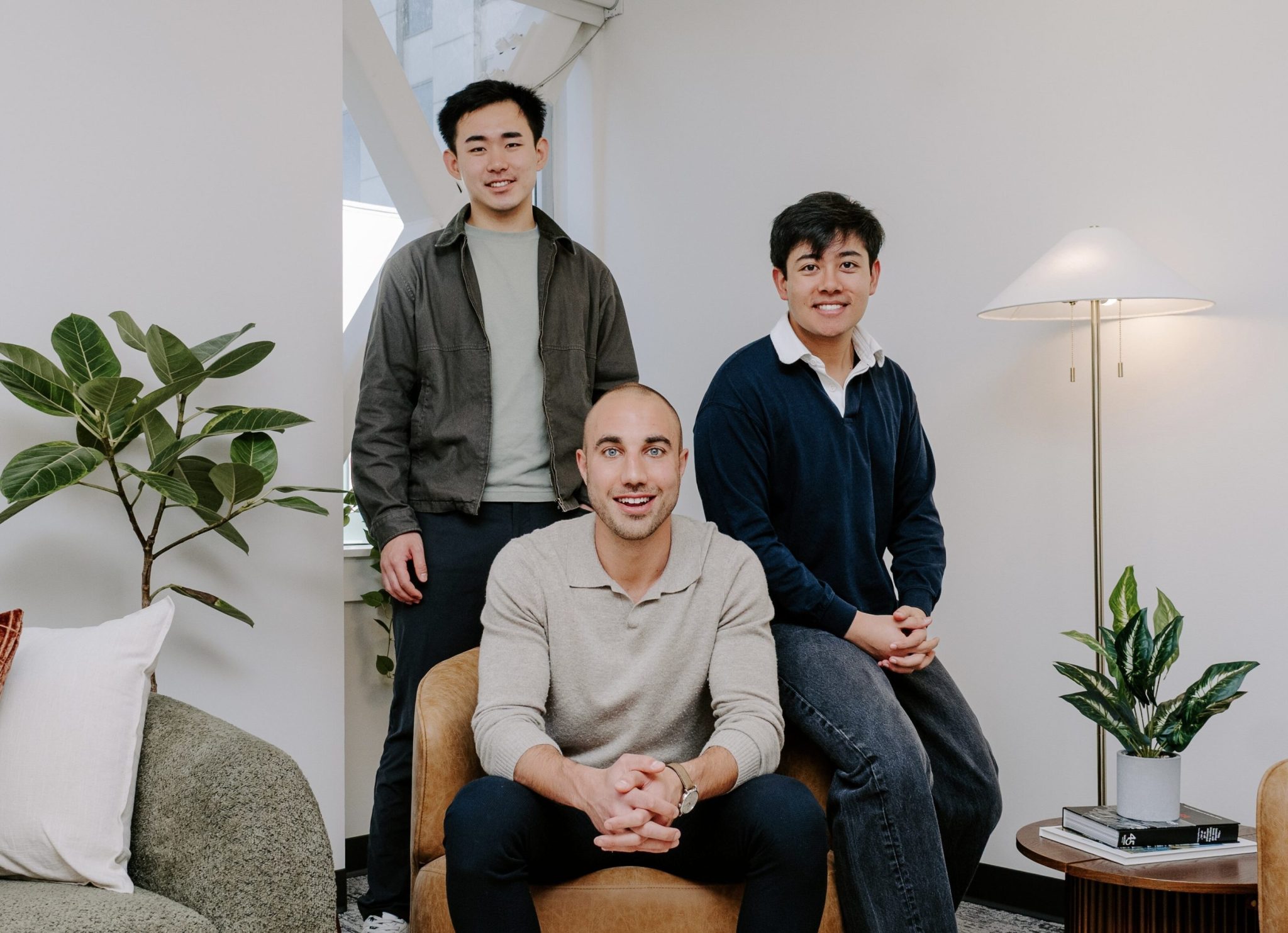
Joubin Mirzadegan will straight-up tell you: it’s boring—and that’s the point.
Mirzadegan’s startup Roadrunner builds AI-native, natural-language “configure, price, quote” (or CPQ) software. And before you keep scrolling, consider: The CPQ process—the software companies use to configure what they’re selling, set the right price, and generate a quote—quietly controls how fast and how well they can turn complex deals and new pricing ideas into actual revenue.
“I say this all the time internally: our ambition is to build a $10 billion company that we’re proud of,” said Mirzadegan. “And our vehicle to do that is CPQ and, more broadly, the whole quote-to-cash space. It’s the vessel with which we want to build a big company.”
Roadrunner—cofounded in 2025 by Mirzadegan, Ajay Natarajan, and Eugene Shao—has the distinction of being Kleiner Perkins’s first incubation since Glean, founded via the legendary VC firm’s Sand Hill Road office and now worth $7.2 billion. Mirzadegan was a partner at Kleiner when he pitched the idea to his boss, Mamoon Hamid.
“Literally, as he came to our one-on-one, Joubin said: ‘I think I’m ready to start a company, I vibe-coded this over the weekend, and this is what it’s going to look like,’” Hamid told Fortune. “[Early on] CROs told us, ‘if you build this for me, I’ll buy from you.’ So, we built the prototype and within three months closed our first seven-figure deal.”
Mirzadegan is still a partner at Kleiner, and the CEO at Roadrunner. The company’s now disclosing funding for the first time to Fortune. Roadrunner’s raised a total of $27 million, including a seed round led by Kleiner and Hamid and a Series A led by Founders Fund. Trae Stephens, partner at Founders Fund and cofounder of Anduril, will join Roadrunner’s board.
“Some things are unique and have a natural moat because they’re super controversial,” said Stephens. “There are other things that have a unique, natural moat because they’re boring. And if a really charismatic person wants to work on the less sexy areas of business, you can build huge businesses with that as your moat.”
CPQ may be boring, but it’s also hard, a problem at the intersection of complex pricing, chaotic org charts, and fossilized software. And over time, there have been more and more ways to price. Historically, pricing was more like a streaming subscription plan: a finite number of tiers, (relatively) static prices. Not so anymore.
“Pricing models have had this Cambrian explosion,” said Mirzadegan. “Now, [with AI] you have all of these new ways of using products and the ways that those products are being priced now [from usage-based to seat-based pricing] do not work with the underlying data models of the previous CPQ solutions.”
In short: Mirzadegan believes CPQ software just wasn’t built for this level of complexity, and believes Roadrunner can pioneer a new system he calls PQA, or “prompt, quote, approve.” In short, you prompt the system, it generates the quote, and uses AI to manage the approval process. And to Hamid’s point, lots of people have to do this.
“Think of it like consumer transactions—credit card companies make 2% to 3% on that transaction, so they can facilitate the payment,” said Hamid. “If you extend that to Roadrunner: we’re going to be that layer that helps you quickly negotiate deal terms and get you all the way to collecting cash faster. How much is that worth? This market is a blue ocean.”
I don’t know if I’ve ever had more people point-blank tell me: This is boring, but it’ll be a serious money-maker. They usually try to dress it up more. But Mirzadegan is direct and strangely tender on the subject.
“Ultimately, if you’re solving hard enough problems that matter enough to customers that are willing to spend money with you, you earn the right to do more,” said Mirzadegan. “We like this vessel because it’s really dang hard to build, really dang hard to sell, and really matters to customers. That’s how I feel about it. You end up falling in love with anything that’s sufficiently hard.”
See you tomorrow,
Allie Garfinkle
X: @agarfinks
Email: alexandra.garfinkle@fortune.com
Submit a deal for the Term Sheet newsletter here.
Joey Abrams curated the deals section of today’s newsletter. Subscribe here.
VENTURE CAPITAL
– Cowboy Space Corporation, a San Carlos, Calif.-based developer of a space-based power grid for AI, raised $275 million in Series B funding. Index Ventures led the round and was joined by IVP, Blossom Capital, SAIC, and existing investors.
– Frame Security, a New York City-based platform that uses AI to simulate and prevent social engineering attacks, raised $50 million in funding from Index Ventures, Picture Capital, Team8, Assaf Rappaport, and Elad Gil.
– Vapi, a San Francisco-based developer of AI voice agents for enterprise use, raised $50 million in funding. Peak XV led the round and was joined by M12, Kleiner Perkins, Bessemer Venture Partners, and existing investors.
– Webidoo, a Milan, Italy-based platform designed to give small and medium-sized businesses easier access to AI tools, raised $25 million in funding. IXC3 led the round.
– Algorithmiq, a Milan, Italy-based quantum software company, raised €18m ($21.2m) in funding. United Ventures and CDP Venture Capital led the round and were joined by Inventure VC.
– Ciridae, a San Francisco-based developer of AI designed to automate processes for mid-sized businesses, raised $20 million in seed funding. Accel led the round and was joined by Andreessen Horowitz and General Catalyst.
– Develo, a Los Angeles, Calif.-based AI-powered operating system for pediatrics, raised $14 million in funding. Blueprint Equity led the round and was joined by Villain Capital, Z21 Ventures, Bienville Capital, and angel investors.
– 4AM, a New York City-based facial wipe company, raised $4 million in seed funding. CAVU Consumer Partners led the round and was joined by B4 Capital and Type Capital.
– Secludy, a San Francisco-based generator of synthetic data for AI training, raised $4 million in seed funding. Impression Ventures led the round and was joined by LAUNCH, The Syndicate, and others.
– Rogue, a Los Angeles, Calif.-based protein snack company, raised $2.5 million in pre-seed funding. Science Inc. led the round and was joined by Uncommon Ventures and Simple Food Ventures.
PRIVATE EQUITY
– 365 Retail Markets, a portfolio company of Providence Equity Partners, acquired Cantaloupe, a Malvern, Pa.-based tech solutions provider for self-service commerce companies. Financial terms were not disclosed.
– Phoenix Flavors & Fragrances, a portfolio company of SK Capital, acquired Turpaz Industries, a Caesarea, Israel-based developer of flavors, fragrances, and ingredients. Financial terms were not disclosed.
– Seaga, a portfolio company of Dominus Capital, acquired Three Square Market, a River Falls, Wis.-based developer of vending machines and self-checkout technology. Financial terms were not disclosed.
EXITS
– Apollo agreed to acquire Questex, a Dover, Del.-based information services and event platform company, from MidOcean Partners. Financial terms were not disclosed.
– Satair, a subsidiary of Airbus, acquired Unical Aviation, a Glendale, Ariz.-based aircraft storage company, from Platinum Equity. Financial terms were not disclosed.
IPOS
– Cerebras Systems, a Sunnyvale, Calif.-based AI infrastructure company, now plans to raise up to $4.8 billion in an offering of 30 million shares priced between $150 and $160. The company raised $510 million in sales for the year ended Dec. 31. Alpha Wave, Benchmark, Eclipse, Fidelity, and Foundation Capital back the company.
– Fervo Energy, a Houston-based geothermal energy company, now plans to raise up to $1.8 billion in an offering of 70 million shares priced between $25 and $26 on the Nasdaq. Devon Energy, Capricorn Investment Group, DCVC, Breakthrough Energy Ventures, and Centaurus Capital back the company.
– Lincoln International, a Chicago, Ill.-based investment banking advisory firm, plans to raise up to $420 million in an offering of 21 million shares priced between $18 and $20. The company posted $809 million in sales for the year ended March 31.
– WhiteHawk, a Philadelphia, Pa.-based gas mineral and royalty business, filed to go public on the New York Stock Exchange. The company posted $68 million in sales for the year ended Dec. 31. Omega Capital Partners backs the company.
FUNDS + FUNDS OF FUNDS
– Kalos Ventures, a New York City-based venture capital firm, raised $78.8 million for its first fund focused on early-stage technology companies.
#Exclusive #Roadrunner #raises #million #Kleiner #Perkins #Founders #Fund