
New NRG CEO leans into growth with ‘bring your own power’ for the AI boom and ‘virtual power plants’
5 min read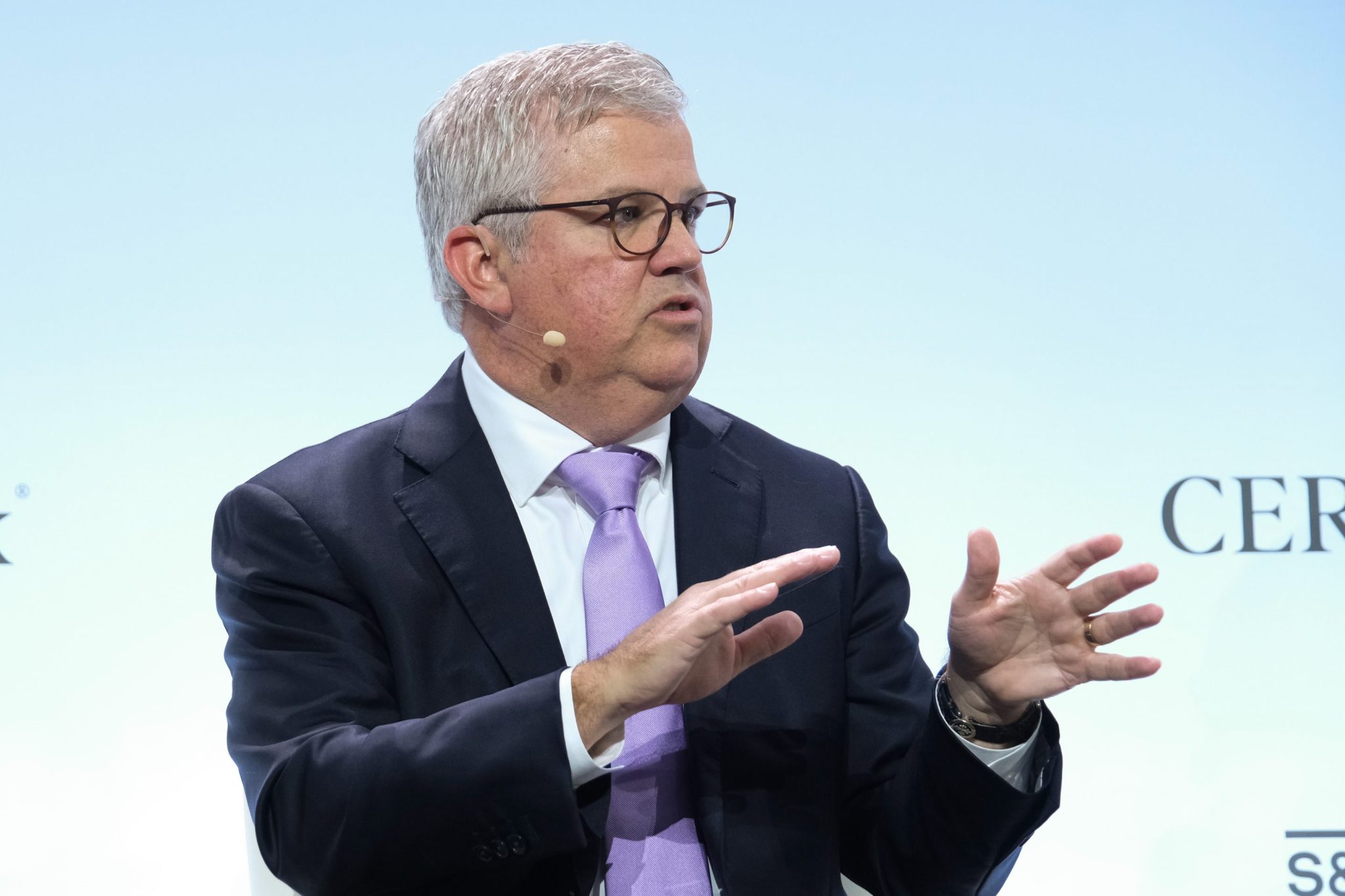
Robert Gaudette took over as the new CEO of power and electricity giant NRG Energy at the end of April ready to ride the AI wave and build the “bespoke desires and needs” of hyperscalers nationwide.
But NRG isn’t only in the business of rapidly building new power plants—primarily gas-fired facilities—to satiate the hunger of data centers. NRG also is leaning into the burgeoning business of turning the United States’ dumb power grid smart with better technology and efficiency.
That’s where demand-response programs and so-called “virtual power plants” come into play, convincing both industrial users and residential customers to turn their thermostats over to AI at times of peak demand—and returning excess renewable energy back to the grid if available—to save energy and keep energy prices lower, essentially acting as a de facto power plant.
NRG (No. 153 on the Fortune 500) represents a tale of two strategies—rapid power growth to satisfy demand and smarter grid efficiency to help solve the rising utility bill woes that are triggering AI backlashes nationwide.
“We’ve barely started the first inning from a VPP-virtual power plant perspective,” Gaudette told Fortune in a sit-down interview. “Where we are today is now we have an affordability issue. Now we have a need. You have the combination of technology, willingness, and the economic desire to find a way to mobilize the power of the consumer to make a difference.”
Scaling up quickly
Early this year, NRG closed the roughly $10 billion acquisition of 18 natural gas-fired power plants from LS Power, nearly doubling NRG’s power generation nationwide. NRG also recently partnered with GE Vernova and Kiewit for 5.4 gigawatts—enough to power 4 million homes—of gas-fired turbines to power data center campuses.
Gaudette is leaning into those two acronyms, VPP and BYOP—bring your own power—paid for by hyperscalers and built by NRG. “NRG is uniquely positioned with two attacks on how we solve the challenges,” he said.
NRG is pushing for AI complexes in Texas, but Gaudette insists there are no limitations. New AI deals are expected later this year.
“They can go anywhere in the country. We haven’t been specific about where we would think the first project would be,” Gaudette said. “We have talked to our investors about the benefits of building down here [in Texas]. It’s one market; it’s one government; it’s one permitting regime. But we can take them wherever our customer wants and where we think it makes the most sense.
“From a speed perspective and getting things done—and getting the data center built—Texas has a lot of advantages,” he added.
Houston-based NRG has its power plants in Texas, the Northeast, Midwest, and a handful of facilities in California.
The moves to scale up with LS power plants and partner with GE made NRG a Wall Street darling as the power sector boomed. But the deal also—more quietly—came with LS’ CPower demand-response business for commercial and industrial (C&I) customers. The CPower tagline is: “Your energy assets have value. We pay you to unlock it.”
Likewise, NRG recently introduced a residential VPP program with its Vivint smart home and Reliant retail electricity businesses. NRG gives away smart doorbells and thermostats for contracted participants.
“We’ve never harnessed the power of the load. We have never gone out of our way to help those people who are using the electricity to use it smarter, to use less of it, and to be more thoughtful about how they do it,” Gaudette said. “It’s hard, and there hasn’t been technology to do it. We’re in a different place now.”
The C&I customers were already moving in this direction.
“We have entire teams that work directly with big customers like that, and we’ve been doing that for a decade,” Gaudette said. “It’s not just around traditional-demand response, but also, ‘Just maybe you should schedule your maintenance outage for next weekend, because it looks like it’s going be very hot and prices are going to be very high.’
“What technology has done is now you can take that same thought process and apply it across a million homes. That’s the big change.”
Rapid changes
The acquisition of Vivint was originally considered a boondoggle by investors and contributed to a previous CEO’s ouster over two years ago. But now it’s considered a key part of the growth story. NRG chairman Larry Coben took over as CEO in late 2023, stabilized the company, and led the LS deal.
But Coben’s leadership was always temporary, handing over the reins to Gaudette, a corporate president who’s been with NRG and predecessor companies for 25 years.
A Houston native and Army veteran—a platoon leader removing mines in Bosnia—Gaudette started as an energy trader with Mirant, which was acquired by NRG in 2012—a few years after it tried and failed to buy NRG.
“The military is its own graduate school—the people, leadership, and stress,” he said with a laugh. “It probably helped me a lot when I was on the trading floor in all of the commodity cycles that we’ve been over through the last 20 years.”
And now the power business is looking strong. NRG’s stock is up nearly 60% in 24 months. However, that overall rise includes a nearly 20% in 2026 down to a market cap of about $27 billion.
NRG’s first-quarter earnings fell short of expectations due to high supply costs during Winter Storm Fern and, alternatively, mild winter weather in Texas.
But those are seasonal factors. What Wall Street wants is for NRG to start announcing some big AI deals and build those 5.4 gigawatts of power—and more.
After all, NRG aimed to complete 20 megawatts of VPP power last year. Instead, it achieved 200 megawatts. NRG recently announced plans to add more than 1 gigawatt of battery storage power to its systems. And NRG is currently building about 1.5 gigawatts of gas-fired power plants at three locations around the Houston area. NRG also forecasts 2 gigawatts of expansion and efficiency projects in the Northeast and Midwest.
“The beauty of NRG is that we have the ability to wrap all of those things—batteries or wind or solar—as well as the firm capacity that a GE Vernova turbine provides, into a solution set for a customer, and we can give it to them all in one bill because we are their retail provider,” he said.
#NRG #CEO #leans #growth #bring #power #boom #virtual #power #plants