
This Harvard dropout took a company public before 30. Now he raised $205M to fix healthcare clinics
4 min read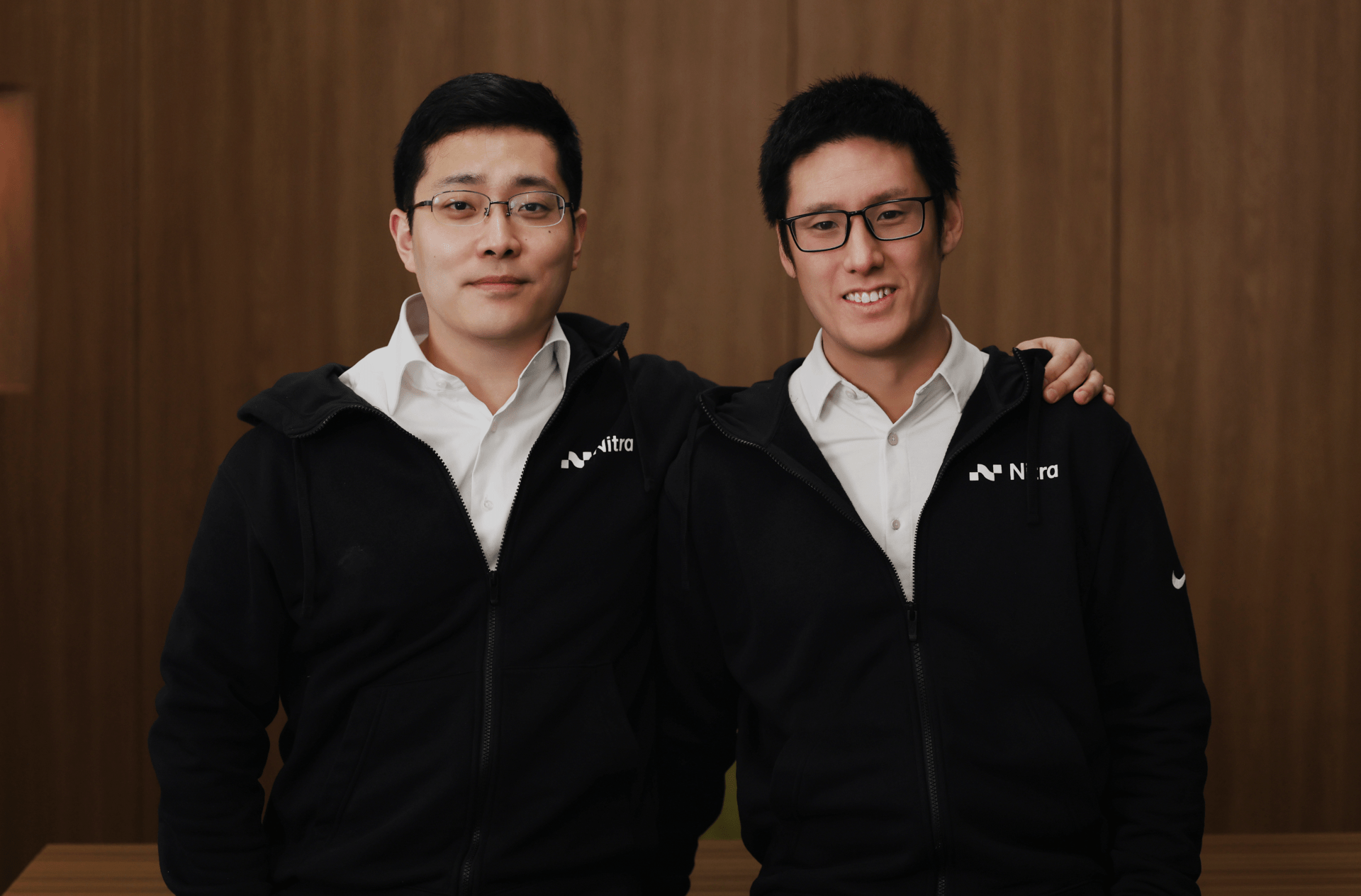
Tim Hwang has spent his career moving between politics, policy, and startups. He worked on Barack Obama’s 2008 presidential campaign, studied public policy at Princeton, and took his first company, FiscalNote, public before he turned 30. Now, at the helm of Nitra, a healthcare financial and operational platform, he’s doing what he calls “the perfect confluence of everything I’ve worked on in the past.”
Nitra is an AI-native operating platform built specifically for medical practices. Rather than patching together separate tools for billing, purchasing, scheduling, and insurance verification, Nitra consolidates all of it into a single system powered by AI agents.
The company targets the administrative layer of healthcare—the back-office work that consumes enormous time and costs inside clinics—and automates it end to end, from expense management and accounting to patient communications and claims filing. It is, in Hwang’s words, designed to replace the fragmented patchwork of software that most practices currently rely on just to keep the lights on.
On Tuesday, Nitra announced a $50 million Series B round, bringing its total capital raised to $205 million. The funding comes alongside a milestone: the company’s platform has surpassed $1 billion in annualized processing volume and crossed $33 million in annual recurring revenue as of December 2025, representing approximately eight-fold year-over-year growth. More than 700 clinics are now live on the platform.
“I think we’re probably in the first inning of our growth trajectory,” Hwang told Fortune ahead of the announcement. “I honestly believe we can get to a billion dollars in revenue in the next couple of years.”
A wedge into the back office
Nitra’s entry point into a practice isn’t a pitch deck or a workflow audit. It’s a credit card. Designed specifically for physicians, the card is linked to a backend suite covering expense management, accounting integration, inventory management, and procurement. Hwang calls it a “Trojan horse.”
“They start swiping. They’re buying all their medical equipment, their surgical equipment. We’re categorizing all their accounting,” he explained.
From there, Nitra’s marketplace—Nitra Rx and Nitra Mart—lets doctors buy pharmaceuticals and specialty equipment directly through the platform. AI agents then handle the back-office orchestration: account reconciliation, insurance claim filing, scheduling, benefits verification, and patient communications.
“We start very small with the doctor, build trust, get them on the card, get them on our bill pay, get them our accounting system, have them start ordering equipment from us, and then we start orchestrating all of that kind of back-office administrative work using our agents,” Hwang said.
It’s a land-and-expand model applied to one of the most administratively burdened industries in the country. And the pitch is easy. “When you go into a doctor and ask how it’s going, most of them just throw up their hands and say they need help,” he added.
Doctors overcome supply chain issues—and AI fears
Hwang credits two forces for Nitra’s breakout growth last year. The first is tariff-driven supply chain pressure. With pharmaceutical, surgical, and medical equipment costs fluctuating sharply, practices are scrambling to control costs they previously didn’t have the tools to track.
“That 8% increase on surgical gloves, that 4% increase in syringes—it just sneaks up on them,” he said.
The second is a broader shift in how physicians relate to technology. As clinical AI tools become standard for scribing and decision support, doctors have grown more comfortable handing the reins of administrative work to software.
The result: Nitra is onboarding clinics at a pace Hwang describes as daily acceleration. “I just looked at my Slack channel, and we probably onboarded six or seven clinics just today,” he said. He’s projecting the platform will scale from $1 billion in annualized processing volume to approximately $4 billion by year’s end.
As part of the announcement, Nitra is also bringing on Dr. Richard Park—founder of CityMD and former executive at Summit Health+CityMD—to its board of directors. Hwang called Park “a legend in the healthcare space” who has had “one of the largest exits in healthcare history.” Beyond the credibility signal, Hwang sees Park as a bridge to physician entrepreneurs who run their own practices. “Many founder physicians really look up to Dr. Park as a role model for how he built up CityMD, how he built this whole category of urgent care,” he said.
Why healthcare, why now
For Hwang, his time with Obama wasn’t just a job — it was a crash course in why healthcare is so hard to fix. Watching policymakers wrestle with the Affordable Care Act as a young staffer showed him just how deeply the system’s dysfunction runs, long before he ever thought about building a company inside it. That early exposure, combined with what he witnessed during COVID, is what ultimately convinced him that the problem was worth a lifetime of work.
Hwang traces his obsession with healthcare back to March 2020, watching CNN broadcast the crisis of personal protective equipment supplies and the overflows of patients in intensive care units. “When you strain the healthcare system like that, you see all the problems very quickly,” he said. So he and co-founder Jonathan Chen decided their next company would be a 20-year project in the biggest industry they could imagine.
The numbers backed them up. Healthcare is now the single largest employer in the United States, and for many Americans over 45, it is their single largest household expense—surpassing rent and groceries. “It just shouldn’t be like that,” Hwang said. “If we can unlock 10 to 20% more time for doctors across the country, that would be a tremendous impact on society.”
“From a business perspective, yeah, I do think Nitra is going to be a decacorn.”
#Harvard #dropout #company #public #raised #205M #fix #healthcare #clinics