
Anthropic lands in London as AI-powered coding—and the anxieties around it—go mainstream
7 min read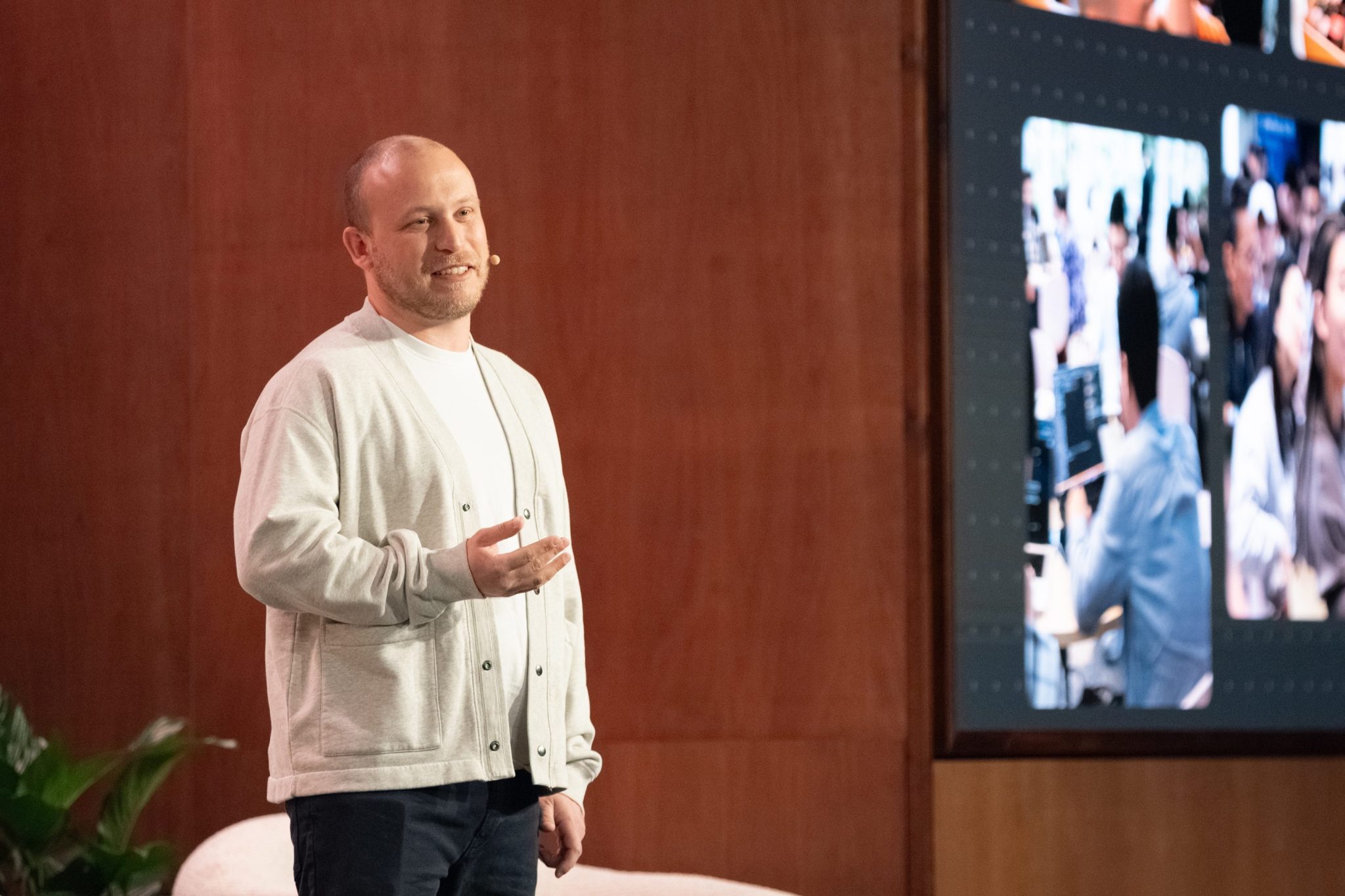
Welcome to Eye on AI. Beatrice Nolan here, filling in for AI reporter Sharon Goldman. In today’s issue: Anthropic’s Claude comes to London…OpenAI’s imminent IPO…Google DeepMind’s union battle…and worldwide AI spending on track to hit $2.59 trillion this year.
Most of Anthropic’s leadership team has hopped across the pond this week. The AI lab is hosting a series of events around the U.K., kicking off with Code with Claude London on Tuesday.
The company used the event to roll out new features for its Claude Agents, including sandboxes that let companies run agents on their own infrastructure, and “MCP tunnels” that let those agents reach internal systems without touching the public internet. In short, new ways for companies to have more control and more security—a possible attempt to calm C-suite nerves about ungoverned AI.
The London event, Anthropic’s first dedicated developer gathering in Europe, underscores how central the city has become to the AI ecosystem, with the city gaining even more prominence in recent months. Heavyweights including OpenAI, Anthropic, and Jeff Bezos’s AI lab, Project Prometheus, have all announced plans to build out a substantial presence in the city. Anthropic’s Claude event was heavily oversubscribed, with a mix of enterprise customers, startup workers, and Claude enthusiasts pouring into the riverside venue despite the rain.
Engineers at startups told me they were using Claude Code and similar tools on a daily basis. Are they concerned about the existential risk this may pose to their jobs? Sure. But better the devil you know, they said. There were a few gripes about Claude’s recent performance issues and Anthropic’s lackluster response, but overall people were pretty happy with the product. (To be expected, perhaps at an Anthropic event.)
Enterprise customers were more complicated. While some were embracing the technology headfirst, others say the rollout has been slower. There’s still some uncertainty about what to automate and when, where a human is needed in the loop, and what can be safely handed off to AI tools. There’s also a certain amount of C-suite hand-holding required. All of these questions get much more pressing when dealing with highly regulated sectors like health care or banking.
Anthropic’s head of engineering, Fiona Fung, had some advice for those wondering where to start when automating with Claude Code: “Pick your noisiest workflow…and ask if it’s still serving its purpose. If it’s something that is really expensive, is it something that Claude can handle?”
The main takeaway from the event: Software engineering is undergoing a changing of the guard, with the grunt work of writing code increasingly handled by AI while humans concentrate on higher‑level decisions and keeping the systems on track. Coding everything by hand is starting to look less like a day job and more like a niche craft.
Boris Cherny, Anthropic’s head of Claude Code, told me he’s always cared more about the result of the work than the details of how the code gets written, and now many engineers feel the same way—they’re happy to let AI handle most of the coding as long as the business outcome is better. Some engineers miss the craft, he acknowledged, adding that some team members still write code on weekends by hand just because they miss it. Much like analog film photography, Cherny thinks there will always be a place for that kind of work.
“I buy my veggies at a farmer’s market,” Cherny said. “There’s always room for that.”
AI breakthroughs, existential risk, and AI therapy
Meanwhile, Anthropic cofounder Jack Clark headed to Oxford University to tackle some of the more philosophical questions posed by the technology the company is developing. In a wide-ranging and often frank lecture, Clark touched on subjects from the possibilities of Nobel Prize-winning AI aided discoveries to the use of his company’s tools for mental health. Oh, and the “non-zero chance” of AI killing everyone on the planet.
He also argued that the pace of progress is accelerating to the point where society may struggle to keep up—warning that geopolitical and commercial competition are making it unlikely that development will slow, even if doing so might be safer.
Clark also revealed he had sought therapy in part because he had been using Claude to talk through some of his personal struggles, and the chatbot prodded him to seek out professional advice.
AI systems need to be designed to do just that, he argued—prompt people to stop using them and seek out real human contact. However, to do this successfully, AI companies may need to be mindful of how they are designing these tools at a higher level. AI chatbots lean toward sycophancy by default, and several recent studies have shown how that tendency can reinforce harmful thinking or overconfidence if left unchecked.
Later this week, Anthropic leaders, including CEO Dario Amodei, are heading to the English countryside for an exclusive CEO forum for European leaders. The event is aimed at helping enterprises understand how they can adopt the company’s technology. What they may find harder to manage is the inevitable pressure from European executives hungry for access to Mythos—Anthropic’s too-dangerous-to-release model that has so far had a limited international release outside of primarily U.S. partners.
With that, here’s more AI news.
Beatrice Nolan
bea.nolan@fortune.com
@beafreyanolan
FORTUNE ON AI
Microsoft lost its way in the AI race. Can Copilot get it back on course? — Jeremy Kahn
SpaceX finally files IPO prospectus, reveals revenue is up–but losses are too — Allie Garfinkle and Alexei Oreskovic
AI IN THE NEWS
OpenAI’s imminent IPO. OpenAI is reportedly preparing to file confidentially for an IPO within days—potentially as early as Friday. The company is working with Goldman Sachs and Morgan Stanley, the Wall Street Journal first reported, citing people familiar with the matter. The move follows a recent legal victory over cofounder Elon Musk, removing a major obstacle. Internally, CEO Sam Altman has reportedly pushed for the listing while CFO Sarah Friar has urged caution. If it goes ahead, OpenAI’s debut would headline what could be a blockbuster year for tech listings, alongside SpaceX and potentially Anthropic. Read more in the Wall Street Journal.
Google DeepMind’s union request rumbles on. Google DeepMind has declined a request from staff within a U.K. union for voluntary recognition but agreed to enter formal talks. The AI lab will meet unions including the Communications Workers Union and Unite through the U.K. arbitration service ACAS, a process that could lead to a formal employee vote on union representation in the coming months, employees and union representatives told Fortune. The push to unionize follows mounting internal concern about how DeepMind’s technology is used by the U.S. and Israeli governments for defense and intelligence purposes. DeepMind has said it respects its employees’ rights but prefers direct engagement over collective bargaining. Read more in The Guardian.
Anthropic is paying SpaceX $15 billion per year. In one of the more interesting revelations in SpaceX’s IPO filing, Anthropic is paying SpaceX $1.25 billion per month—$15 billion a year—through May 2029 as part of the compute deal the two companies signed earlier this month. The payments will be reduced for May and June as the deal ramps up, according to Wednesday’s S-1 filing. The financial details weren’t disclosed when the partnership was announced last month, only surfacing Wednesday when SpaceX filed for its IPO. Read more in Fortune.
Trump moves to vet AI models before release. According to a report in the New York Times, President Trump plans to sign an executive order giving the U.S. government new powers to scrutinize advanced AI models before they are released. The order would reportedly give the Office of the National Cyber Director and other agencies two months to design a process for reviewing models that companies share 14 to 90 days before launch. The aim is to catch security flaws before they can be used to attack important infrastructure such as banks or utilities. The move was reportedly sparked by Anthropic’s Mythos model, which officials fear could help adversaries discover software vulnerabilities at scale, intensifying internal debates between national security officials pushing for more oversight and those worried about slowing U.S. firms in the AI race with China. Read more in the New York Times.
EYE ON AI NUMBERS$2.59 trillion
That’s how much worldwide spending on AI is forecast to total in 2026, a 47% increase year-over-year, according to new data from Gartner. The surge is being driven largely by AI infrastructure—optimized servers, semiconductors, and cloud capacity—which alone accounts for over 45% of spending, with AI-optimized server spending expected to triple over the next five years.
The bulk of that spending is still coming from tech vendors and hyperscalers rather than enterprises, which Gartner says have yet to really flex their spending potential. Model consumption is forecast to grow 110% this year, adding $6 billion in new spending, as companies expand into agentic workflows and multi-step AI processes. Gartner Distinguished VP Analyst John-David Lovelock noted that most organizations are still favoring tactical, incremental AI initiatives over more disruptive transformation, making it harder for CIOs to prove value and show tangible business outcomes from their AI bets.
AI CALENDAR
June 8-10: Fortune Brainstorm Tech, Aspen, Colo. Apply to attend here.
June 17-20: VivaTech, Paris.
July 6-11: International Conference on Machine Learning (ICML), Seoul, South Korea.
July 7-10: AI for Good Summit, Geneva, Switzerland.
Aug. 4-6: Ai4 2026, Las Vegas.
#Anthropic #lands #London #AIpowered #codingand #anxieties #itgo #mainstream