
Techscaler grows but taxpayer still key to funding – Daily Business
4 min read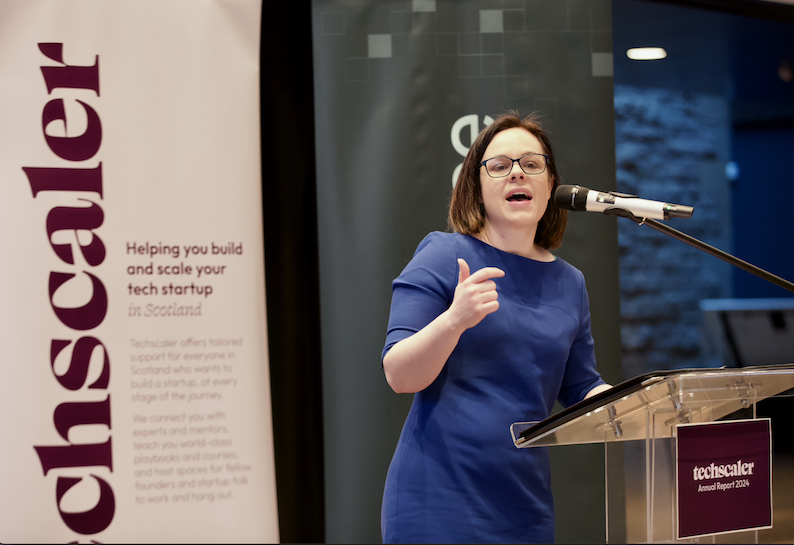
Kate Forbes led the Techscaler initiative in government (pic: Terry Murden / DB Media Services)
Scotland’s techscaler initiative has seen an acceleration of funding for early stage companies, though the bulk of support continues to come from the taxpayer.
New figures show that founders have raised £257 million since joining the programme an increase of £139m on the previous 12 months.
While private investors from overseas have joined UK-based backers, the latest annual review shows that Scottish Enterprise, the economic development agency, still accounts for the lion’s share of funding support.
It took part in 288 equity deals between 2023 and 2025, considerably more than the closest private sector providers, such as Equity Gap (54 deals), Par Equity (48), and Kelvin Capital (45).
The initiative was introduced by Deputy First Minister Kate Forbes on the recommendation of the former chief entrepreneur Mark Logan. It has offices in a number of locations and has helped firms looking to raise funding and seek mentoring overseas, such as Silicon Valley and Singapore.
First Minister John Swinney welcomed the report at the opening of a new Tayside base at Water’s Edge in Dundee.
“Techscaler was created to strengthen Scotland’s entrepreneurial environment by giving founders the skills, support and connections needed to build globally competitive companies,” he said.
The annual report says 1,591 companies are now engaged in the programme, a significant leap from 978 in 2024.
However, the Digit website says progress in creating the tech ecosystem has been slow, stating that Scotland’s 1,614 tech firms compares unfavourably with the Republic of Ireland which is home to 4,658 tech firms that have raised €1.48 billion.
In a foreword to the report, Jon Hope, interim CEO of CodeBase, the delivery partner for the techscaler programme, says: “Strong ecosystems rely on local angels writing early cheques to promising but inexperienced founders.
“In Scotland, this is slower and less confident than it needs to be. Not all angels understand tech, venture risk, or the pace required, so capital doesn’t always reach founders when momentum matters most.
“Scotland has brilliant founders, but not yet enough proven at building globally scalable companies. This, not capital scarcity, is often the real constraint.”
At the event in Dundee, games industry entrepreneur Chris van der Kuyl, chairman, 4J Studios said: “The Techscaler Hub for the Tay Cities Region opening at Water’s Edge represents a significant commitment to Dundee and a recognition of its status as one of the country’s key centres for technology scale ups.
Chris Van der Kuyl: significant commitment (pic: Terry Murden / DB Media Services)
“Surrounded by some of our nation’s best companies and brightest talent and supported by a mature and dynamic ecosystem I believe the members of this programme will have a distinct advantage and an increased chance of success.”
Businesses selected for the first cohort at Waters Edge are Fish Tin Games, Shouty Knot, Umbra Dynamics, Fochram Arts, JBSB Studios.
Earlier this week the ScaleUp Institute’s inaugural Female Founder Scottish Index revealed that while the growth of Scottish scaleups founded or co-founded by women is outpacing the UK national average, challenges remain in areas including access to investment, talent, and support.
These women-led firms have raised £117m in equity investment to date, an increase of approximately 80% since last year. However, the report notes that the funding is invested in a relatively small number of the businesses in the Index.
A report last week from Women’s Enterprise Scotland showed that women-led employer businesses have dropped from 20% to just 16% in a single year.
Despite women leading 54% of business start-ups, the post-start-up attrition rate among female-led businesses in Scotland has escalated to 70%, meaning seven in ten women who launch businesses are closing within the critical establishment phase.
Separately, new legislation has been passed giving greater legal protection to digital assets. By clarifying rights to ownership, the Digital Assets (Scotland) Bill enables individuals and businesses to trade and invest with more confidence.
Scotland’s financial technology sector is now worth £14 billion to the Scottish economy. It has grown from 26 companies in 2018 to more than 260 in 2026, including those directly involved in developing digital assets.
Speaking after the legislation was approved by the Scottish Parliament, Business Minister Richard Lochhead said: “Digital assets are used for a wide range of purposes – from payments and investments to innovative financial products and services by businesses and individuals.
“As they become more integrated into our financial markets, providing greater legal certainty for those who invest in, trade and own them is increasingly important.
“The Digital Assets (Scotland) Bill supports the fast-changing digital economy and helps ensure Scotland remains an attractive destination for financial technology companies, enabling them to continue innovating and driving economic growth.”
Associate at law firm CMS Euan Reid said: “The Bill being passed is welcome news for Scotland and its continuing role within the digital assets markets and as a technology hub. It clarifies the law for legal practitioners and market participants, providing legislative recognition of digital assets.
“The new legislation is technology neutral, providing flexibility for future technological advances and allowing Scots law to keep pace with other jurisdictions.”
#Techscaler #grows #taxpayer #key #funding #Daily #Business