
Treasury Secretary Scott Bessent rules out oil futures intervention
3 min read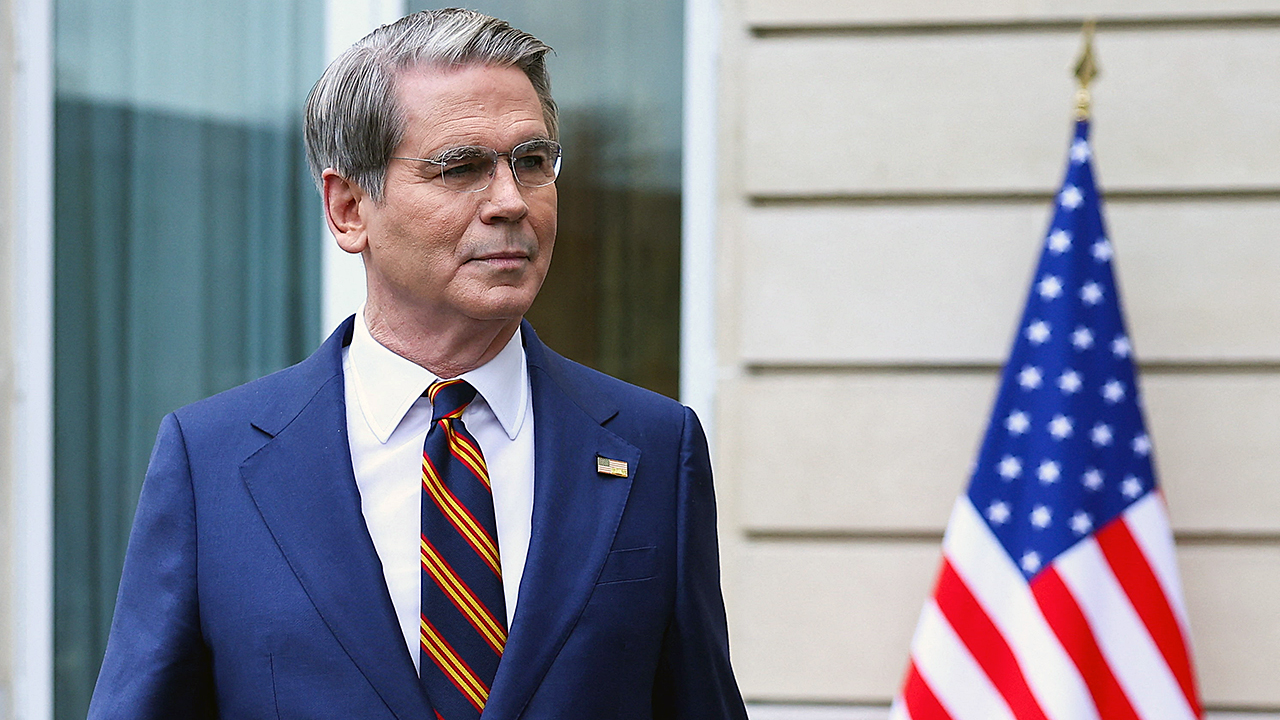
Treasury Secretary Scott Bessent joins ‘Mornings with Maria’ to discuss the Iran war, surging oil prices, market volatility, Fed uncertainty, Powell’s future and the U.S. strategy to stabilize the global economy.
Treasury Secretary Scott Bessent said the U.S. government will not intervene in oil futures markets even as the administration moves to offset supply disruptions tied to the Iran conflict, arguing that Washington’s response will focus on boosting physical crude availability instead.
“We’re absolutely not doing that,” Bessent told FOX Business’ “Mornings With Maria” on Thursday, when asked about possible Treasury intervention in the futures market. “We’re not intervening in the financial markets. We are supplying the physical markets.”
In an interview with Maria Bartiromo, Bessent said the administration has prepared a coordinated supply response designed to cushion the impact of any temporary disruption around the Strait of Hormuz. He said the U.S. had already moved to “unsanction” Russian oil cargoes already on the water, estimated at about 130 million barrels, and could do the same with roughly 140 million barrels of Iranian oil in floating storage.
“In essence, by the time we unsanctioned the floating Iranian oil, we would have intervened and we would have created about 260 million excess barrels of energy,” Bessent said, calling that a “physical intervention” rather than a financial one.
TANKERS TO RESUME NORMAL MOVEMENT IN MIDDLE EAST IN ‘A FEW WEEKS’ AT WORST, ENERGY SEC SAYS, ENDING OIL SURGE
Secretary of Treasury Scott Bessent said the key to keeping oil prices in America down is to boost the oil supply for the rest of the world. (Nathan Posner/Anadolu via Getty Images / Getty Images)
Bessent said that volume could help cover what he described as a temporary deficit of 10 million to 14 million barrels per day if shipping through the strait is interrupted, providing roughly three weeks of market stabilization. He also pointed to a 400 million-barrel coordinated Strategic Petroleum Reserve release approved last week and said the U.S. could act again unilaterally if needed.
TRUMP WAIVES JONES ACT FOR 60 DAYS IN BID TO FREE UP THE FLOW OF OIL TO US PORTS
“The largest coordinated SPR release in history, 400 million barrels, was approved last week,” he said. “The U.S. could unilaterally do another SPR release to keep the price down.”
About 20% of the world’s oil supply crosses the Strait of Hormuz off the coast of Iran. The Iranian Regime is threatening to attack any vessels that cross the strait without permission. (Fox News / Fox News)
Bessent framed the strategy as part of a broader effort to balance pressure on Iran with energy market stability. He said the U.S. has avoided striking Iranian energy infrastructure even while escalating military operations, arguing the goal is to preserve supply while keeping pressure on Tehran.
GET FOX BUSINESS ON THE GO BY CLICKING HERE
“We have lots of levers,” Bessent said. “We’ve got plenty more that we can do.”
Dan Brouillette, former Energy Secretary under Trump, discusses whether NATO should aid in securing the Strait of Hormuz, oil prices, Cuba’s nationwide blackout and more on ‘Varney & Co.’
CLICK HERE TO READ MORE ON FOX BUSINESS
Supplying the world more oil from Iran is going to ultimately bring down prices in America, according to Bessent, who noted the U.S. does not rely on Middle East oil but the chokepoint on oil through the Strait of Hormuz has indirectly strained supply and spooked crude futures markets.
#Treasury #Secretary #Scott #Bessent #rules #oil #futures #intervention