
Iran war could reduce Middle East luxury sales by 50% this month, analysts say
3 min read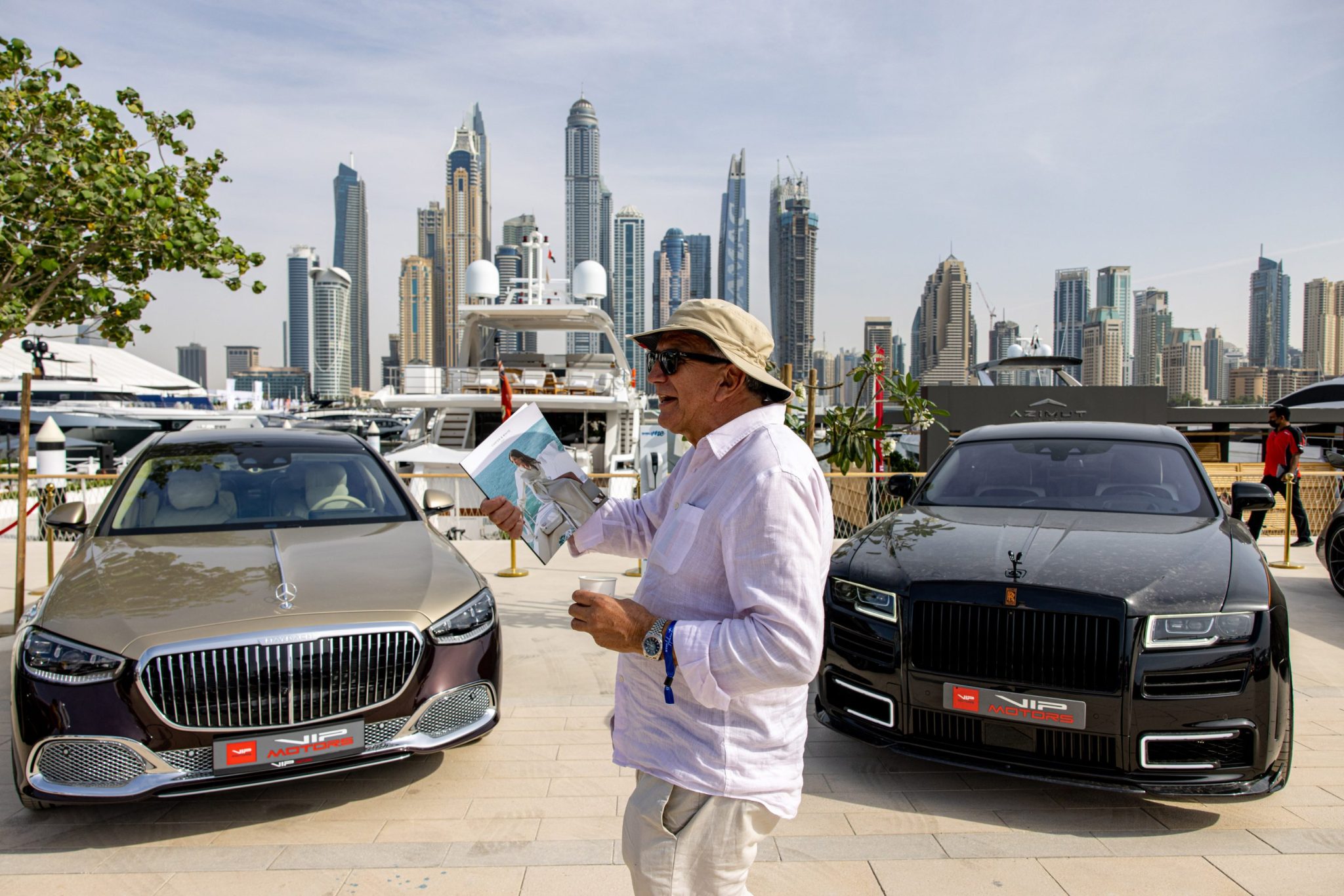
The Middle East’s thriving luxury sector isn’t immune to the war in Iran, and CEOs of top brands have their eyes on the region.
“Clearly, we look close and every day on the situation,” Hugo Boss CEO Daniel Grieder said during an earnings call earlier this month. “It has a direct impact on store opening and store performance because there’s not many tourists or less tourists shopping. That’s clear. That has an effect on the shopping centers and so forth and for all the brands.”
A recent Bernstein Research report forecasted luxury sales in the Middle East would fall by 50% this month, primarily a result of a decline in traffic and tourism.
Still, it’s too early to say what the overall impact of the conflict will be, Grieder said, adding that the German designer brand has not yet seen any fallout. Executives at Prada and Salvatore Ferragamo have shared similar sentiments in recent calls with investors.
The Middle East region makes up about 6% of the world’s luxury market, but is among the fastest-growing geographies, with sales growing 6% to 8% organically, Bernstein reported. That’s compared to an otherwise stagnant sector.
“If the war was to end relatively shortly, this would not be a huge issue for the global luxury goods in the states,” Luca Solca, senior analyst of luxury goods at Bernstein, told Fortune. “If the war was to continue, then I think if oil and gas prices were staying high, then I think there would be a higher probability of a recession.”
The expanding luxury market in the Middle East
Luxury brands have grown deep roots in the Middle East, particularly in airports in Dubai, Doha, and Abu Dhabi. According to Bernstein, Dior and Gucci, which each get 20% of sales, excluding beauty and multi-brand stores, from the region.
The high-end market has grown along with the area’s wealth. From 2019 to 2022, the ultra-wealthy in the Middle East and North Africa saw their wealth double, per a 2023 OxFam report. The richest 106,080 people (making up 0.05% of the population) saw their wealth swell 75% from $1.6 trillion to $3 trillion in that span.
The wealth from these high-net-worth individuals has helped to drive the expansion of luxury sectors in the area. RBC Capital analyst Tom Narayan told Fortune these wealthier buyers are willing to splurge on the more expensive, top-of-the-line models, such as luxury supercars, making them a lucrative customer base for high-end brands.
“It’s certainly the high-margin region,” Narayan said, “meaning the cars they sell in the Middle East are more profitable versus the cars they sell outside that region.”
When luxury brands should begin to worry
Some brands are already shifting focus away from their usually reliable Middle East buyers. Ferrari and Maserati have temporarily halted shipments to the region, the companies said earlier this week.
To be sure, the Middle East accounted for just 4.6% of Ferrari’s 2025 global shipments, and Narayan said the automakers should be able to make up for lost deliveries in other markets, such as in Europe.
Still, consequences of a prolonged war loom. Bernstein said an ongoing conflict could throttle travel to the region, which is responsible for 30% of sales. Higher oil and gas prices, as well as concerns of a recession or fear of terrorist threats could also drive lower sales.
While President Donald Trump has signalled the conflict could last about a month, some analysts predict oil prices could remain elevated through 2027, making travel more expensive and adding economic pressures on consumers.
“Higher energy prices could potentially make global recession more likely,” Solca said. “If that materialized, then, of course, we would have a ricochet on discretionary sectors, and luxury is one of those. So we cannot take a global recession lightly.”
#Iran #war #reduce #Middle #East #luxury #sales #month #analysts